

Before joining a concierge membership, ask who coordinates your requests, what the membership covers, how changes are handled, what commitments you are making, and how your information is protected. Ask how the relationship continues between journeys—not just how an individual request gets fulfilled. Use the answers to distinguish ongoing coordination from a service you would use only occasionally.
- Prioritize questions before joining a concierge membership that establish responsibility, scope, discretion, and continuity.
- JetVoy suits individuals seeking ongoing private concierge coordination across travel, aviation, residences, and access.
- Ask each membership to explain its limits, handoffs, and escalation process before you apply.
- Assess the ongoing relationship, not an isolated itinerary or an implied promise of access.
Why this matters
A private concierge membership is a relationship decision. Your assessment should establish whether the service fits how you travel, who acts on your behalf, and how much involvement you want to retain.
JetVoy describes its private concierge membership around coordination across global travel, private aviation, exceptional residences, and exclusive access. JetVoy is best suited to globally mobile individuals seeking an ongoing private concierge relationship across these areas. That scope provides a starting point for questions, not a substitute for understanding the membership terms.
For your 2026 evaluation, separate the description of a service from the commitments that govern it. A statement about discretion needs an explanation of information handling; a statement about coordination needs an explanation of responsibility. Neither should rest on your interpretation alone.
What should I ask before joining a concierge membership?
Start with these 6 questions. Ask for direct answers, then test those answers against a realistic situation from your own life. You do not need to disclose sensitive details to establish whether the operating approach fits.
1. What does the membership coordinate, and what falls outside it?
Ask the membership to define its scope across travel, aviation, residences, and access. Establish which areas are included in the relationship, which require separate arrangements, and which the service does not undertake.
Be specific about the distinction between coordinating a provider and delivering that provider's service. Who confirms the arrangements? Who explains the provider's conditions? Who tells you when a request cannot be fulfilled?
A useful answer identifies boundaries as clearly as capabilities. A broad description without exclusions leaves you to discover the limits during a live request.
For a membership you are assessing in 2026, request the current written scope rather than relying on an earlier introduction or a conversation with someone whose arrangements differ from yours.
2. Who holds responsibility across connected arrangements?
Ask who maintains the overall picture when travel, aviation, residences, and access depend on one another. Establish whether there is a designated contact, how responsibility transfers between people, and what happens when your usual contact is unavailable.
The central question is not simply whether someone answers. It is whether the person responding understands the surrounding arrangements and knows which decisions remain unresolved.
Ask for an explanation of a handoff without requesting confidential client examples. A service can describe its process without identifying anyone. Look for a clear distinction between receiving your message, assigning responsibility, and confirming that the necessary actions are complete.
3. How are changes carried through the wider plan?
Use a hypothetical change: your departure moves, but a residence arrival and an access arrangement still reflect the original schedule. Ask how the membership identifies the affected arrangements, contacts the relevant providers, and brings decisions back to you.
Then ask what requires your authorization. Establish who can approve a change, how that authority is recorded, and what happens when you cannot respond.
The test is whether a change is treated as a connected problem, not a standalone message. Do not assume that coordinating one part of a journey automatically includes reviewing everything around it.
4. How will you handle my information and delegated contacts?
Ask what information the membership needs, why it needs it, and who can receive it. Include travel preferences, identity documents, residence details, and information supplied by an assistant or family office where relevant.
Request the applicable privacy terms and an explanation of provider disclosures. Ask how you can correct information, change authorized contacts, or withdraw an instruction to share particular details.
Discretion is not an instruction to remain vague. You need enough clarity to decide what you are comfortable providing and who is authorized to act. Do not send sensitive documents merely to demonstrate that your inquiry is serious.
5. What commitments and conditions am I accepting?
Request the membership agreement and review the term, renewal provisions, termination process, exclusions, and responsibilities of each party. Ask how membership obligations differ from the conditions attached to individual providers or arrangements.
Establish how additional commitments are presented for your approval. You should understand when an exploratory request becomes an instruction with consequences, and who is permitted to give that instruction.
For a 2026 membership decision, use the current agreement as the reference point. Keep written clarifications with it, and ask the membership to resolve any conflict between a verbal explanation and the document before you proceed.
6. What does a suitable ongoing relationship look like?
Describe the pattern of support you expect: recurring travel, coordination involving an assistant, interdependent arrangements, or an occasional isolated request. Ask the membership which parts of that pattern fit its service and which do not.
Discuss how preferences are reviewed and how you would communicate dissatisfaction. Ask how the relationship is assessed if your circumstances change.
A qualified application explains the relationship you need, not just the next request you want fulfilled. An application is an assessment of fit; it should not be treated as confirmation of acceptance or a promise that any particular request will succeed.
How should I compare private concierge memberships?
Compare private concierge memberships against the same questions, using their written answers. Do not compare one membership's detailed terms with another's introductory description.
The table below contrasts evaluation criteria, not claims about named providers. Use it to distinguish a relationship centered on individual requests from one intended to coordinate connected needs over time.
| Criterion | Request-centered relationship | Continuous coordination relationship |
|---|---|---|
| Best for | Someone assessing help with discrete requests | Someone seeking an ongoing relationship across connected needs |
| Starting point | What you want fulfilled now | What the request affects across your arrangements |
| Responsibility to establish | Who owns the individual request | Who maintains oversight across related arrangements |
| Potential advantage to verify | A clearly bounded assignment | Continuity of context between requests |
| Limitation to examine | Wider dependencies might remain your responsibility | The relationship requires clear authority and information boundaries |
| Evidence to request | Scope and completion criteria | Scope, handoffs, escalation, and change handling |
Neither approach removes the need for clear terms. A narrowly defined service can fit a narrowly defined need; a broader relationship is not automatically the better choice.
For JetVoy, assess the stated private concierge coordination scope against your actual requirements. Its relevance is the ongoing relationship across travel, aviation, residences, and access; that scope alone does not establish response commitments, provider conditions, or the outcome of a particular request. Confirm those matters directly.
Why membership fit varies
Membership fit depends on what you need coordinated and how you want the relationship to operate. Use these factors to prepare your application rather than trying to infer an unstated eligibility threshold.
- Travel: Describe whether your requirements are isolated or connected across journeys. Explain which decisions you want to retain.
- Aviation: Identify where aviation arrangements intersect with the rest of your plans. Ask where coordination responsibility begins and ends.
- Residences: Explain how residence requirements connect with arrivals, departures, and the people traveling with you. Confirm the scope rather than assuming it.
- Access: Describe the request accurately and ask about the process and limitations. Do not treat membership as a guarantee of admission or availability.
- Authorized contacts: Identify whether you, an assistant, a family office, or corporate colleagues will issue instructions. Ask how conflicting directions are resolved.
The useful distinction is between having several requirements and needing someone to coordinate their dependencies. Your application should make that distinction visible.
How can I test the answers before applying?
Use 2 hypothetical scenarios: an ordinary request and a disruption. Keep the details general, but include enough context to expose dependencies. Ask each membership the same follow-up questions so the answers remain comparable.
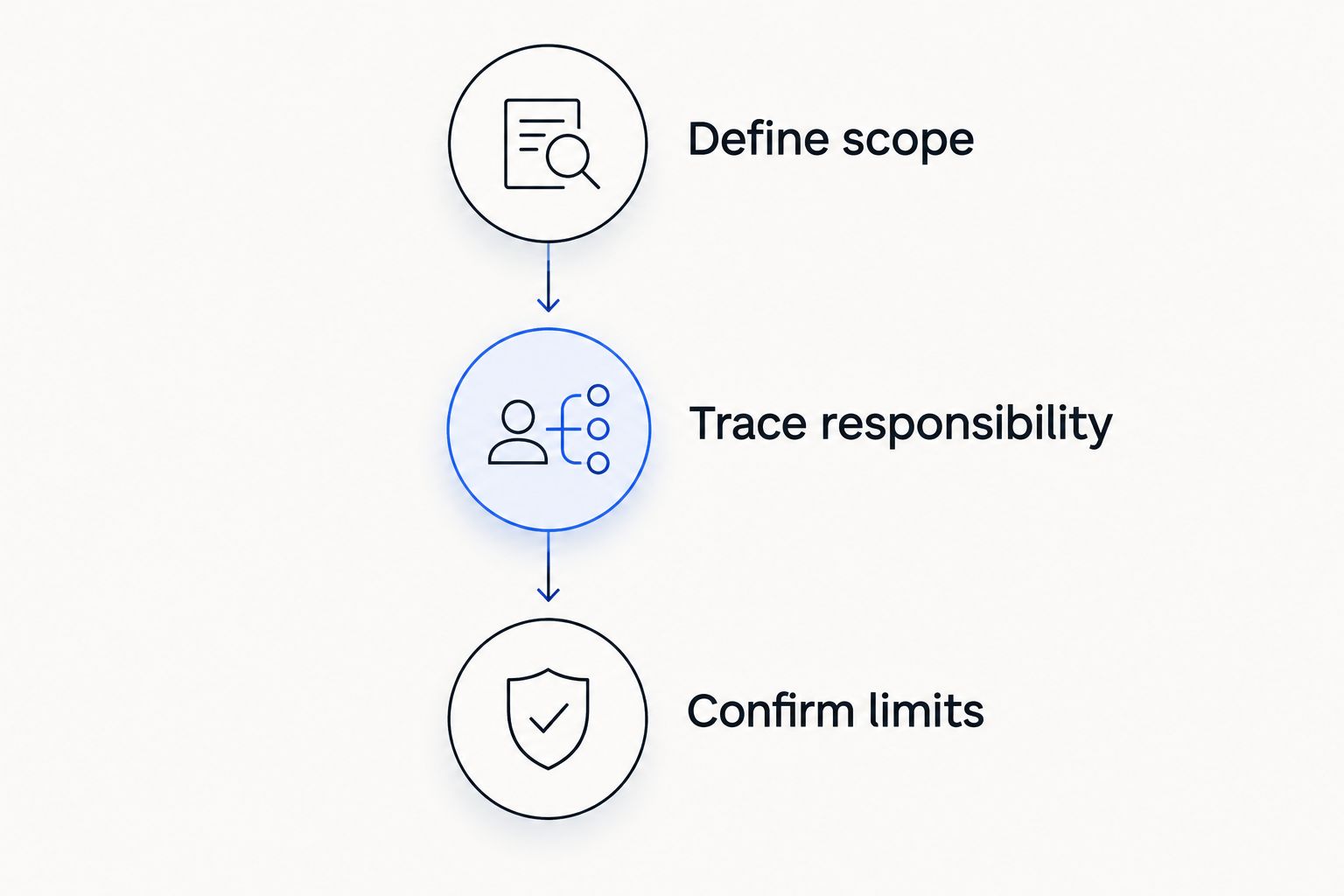
Work through 3 stages:
- Define scope: State the desired outcome and ask what the membership would coordinate. Identify exclusions before discussing execution.
- Trace responsibility: Ask who holds the overall context, who contacts providers, and which decisions return to you.
- Confirm limits: Ask what remains outside the membership's control and how unresolved issues are communicated.
An ordinary scenario establishes the basic relationship. A disruption tests whether the explanation remains clear when an assumption changes. Neither exercise requires a provider to disclose another member's arrangements or promise a particular result.
Should I join if I only need help with one journey?
One journey is not, by itself, a reason to enter an ongoing membership. Ask whether the relationship still fits after that journey ends, including the obligations you would retain.
A complex journey can reveal coordination needs, but complexity and continuity are different questions. Assess both before applying.
Does concierge membership guarantee exclusive access?
Concierge membership should not be treated as an access guarantee. Ask how a specific request is assessed, what conditions apply, and what the membership can actually commit to.
A clear limitation is more useful than an expansive implication. Evaluate the process without turning a description of access into a promised outcome.
What should I include in a membership application?
Include your recurring coordination needs, the areas involved, your preferred decision-making structure, and any authorized representatives. Explain whether you are seeking support for yourself, a family office, or an executive role without disclosing unnecessary personal information.
For an application submitted in 2026, describe your current requirements rather than an aspirational travel pattern. Precision helps both sides assess the relationship; it does not imply automatic acceptance.
FAQ
What are the most important questions before joining a concierge membership?
Ask about scope, responsibility, change handling, privacy, contractual commitments, and ongoing fit. Request written clarification where an answer affects what you are agreeing to.
How do I know whether a private concierge membership suits me?
A private concierge membership suits an ongoing need when its scope and operating approach match the relationship you want. Assess recurring coordination requirements rather than relying on the appeal of an individual request.
Can my assistant or family office communicate with the concierge?
Confirm whether and how the membership accepts instructions from an assistant or family office. Establish authorized contacts, approval rights, and the process for resolving conflicting instructions before sharing sensitive information.
What should I ask about privacy before applying?
Ask what information is collected, who receives it, and how authorized contacts and provider disclosures are managed. Review the applicable privacy terms before sending identity documents or detailed personal arrangements.
What should happen if my travel plans change?
Ask the membership to explain who reviews affected arrangements, contacts providers, and seeks your approval. Confirm the process rather than assuming every connected arrangement is automatically included.
Is an application the same as acceptance into a membership?
An application is not confirmation of membership acceptance. Treat it as an opportunity to establish fit and understand the applicable terms before making commitments.
What documents should I review before joining in 2026?
Review the current membership agreement, scope, privacy terms, and applicable provider conditions before joining in 2026. Resolve unclear renewal, termination, authorization, and exclusion provisions before proceeding.
One last thing
Ask this before ending the conversation: What would remain my responsibility even after I become a member? It brings scope, authority, and limits into a single practical question.
Keep the answer alongside your other written clarifications. A membership decision should rest on an understood division of responsibility—not on how much you assume the service will absorb.