

A weather contingency for private travel is a plan made before departure that names the trigger, the alternate, and the person who decides. Build it 48 to 72 hours out, confirm it again on the morning of travel, and hand every party the same version. For private flight weather contingency planning, the plan matters more than the forecast.
- Private flight weather contingency planning means setting triggers, alternates and decision rights before departure, not on the ramp.
- Name one alternate airport and one ground fallback per leg, and confirm both with every provider.
- One coordinator should own the plan and every change, so crew, ground and hotel stay aligned.
- Review the plan at 72 hours, 24 hours and on the morning of travel in 2026.
Why this matters
Weather rarely cancels a trip outright. It breaks the connections around the flight: the car waiting at the wrong terminal, the hotel holding a late arrival, the meeting that cannot move.
Most concierge services respond to a delay once it happens. A contingency plan anticipates it. The difference in 2026 is the same as it was before: whoever decided in advance loses the least time.
How to prepare a weather contingency for private travel
A contingency has five parts. Write each one down and share it with everyone touching the itinerary.
- Set the trigger. Define what counts as a change: a forecast threshold, an operator advisory, or a crew recommendation. A trigger turns a vague worry into a decision point.
- Name the alternate airport. Pick one suitable alternate per leg, with runway length and customs capability confirmed against the aircraft and the passengers' needs.
- Set the decision window. Agree when the go, shift or hold call is made. Earlier calls preserve more options; late calls preserve only the original plan.
- Build the ground fallback. If the route moves, the car, the hotel and the onward leg must move with it. Confirm a second pickup point and a flexible arrival hold.
- Assign one owner. One coordinator holds the plan, receives every update and relays it. Without that, each provider adjusts alone.
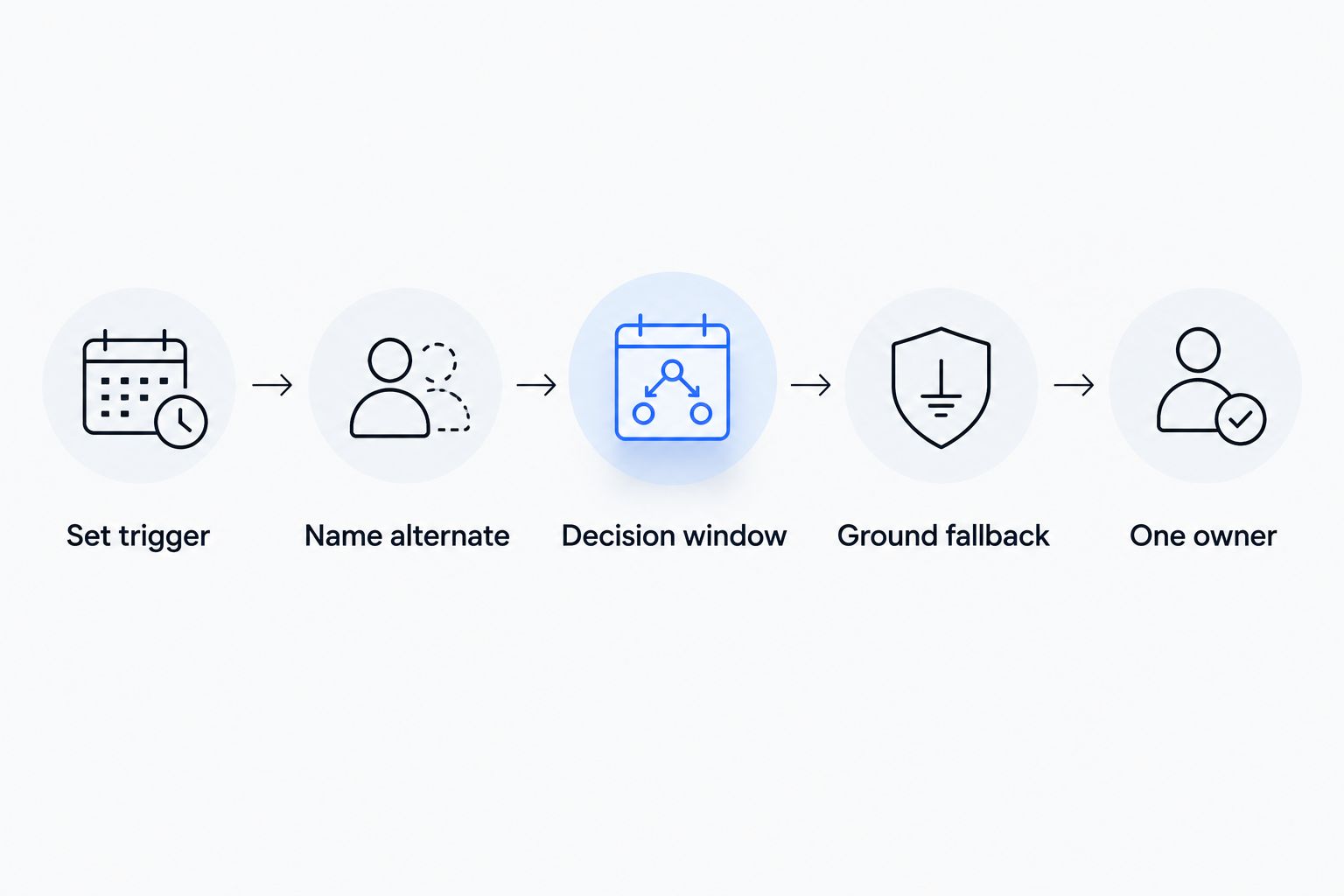
What a weather contingency plan should contain
Use this table as a checklist when reviewing a plan with your operator or coordinator.
| Element | What to confirm | Who holds it |
|---|---|---|
| Trigger | The condition that opens the contingency | Coordinator and operator |
| Alternate airport | Runway, customs, handling suitable for the aircraft | Operator |
| Decision window | When go, shift or hold is called | Coordinator |
| Ground fallback | Second pickup point, flexible arrival hold | Ground provider |
| Accommodation | Late or early arrival acknowledged | Residence or hotel |
| Communication | One thread, one owner, same version for all | Coordinator |
Why a weather contingency varies by trip
No two plans look alike. These factors change what you build:
- Route and season. Mountain, coastal and long-haul legs carry different exposure.
- Aircraft capability. Performance and range shape which alternates are usable.
- Time sensitivity. A fixed event needs an earlier decision than an open itinerary.
- Passenger profile. Family travel, medical needs and security preferences narrow the alternates.
- Onward connections. A second flight or a ground transfer multiplies the points that can fail.
How early should you make the weather call?
Make the first review 72 hours out, the second at 24 hours, and the final one on the morning of travel. Earlier reviews keep alternates open. The final check confirms that every provider holds the same version.
Who should own the plan during disruption?
One coordinator should own it. Splitting ownership between the operator, the driver and the hotel means three partial pictures. Complex travel rarely fails from one major mistake; it fails through small timing gaps and handoffs that no one absorbs.
Is a backup airport enough?
No. An alternate airport solves the flight and ignores the car, the stay and the next commitment. The plan is only complete when the ground and accommodation shift with the route.
Where JetVoy fits
JetVoy operates as a coordination layer across aviation, ground, residences and access, so a weather change is absorbed across the whole itinerary rather than handled leg by leg. That continuous coordination is the point of an ongoing membership. It is not a one-off request. If you are weighing private concierge memberships, the JetVoy vs Quintessentially comparison sets out how the two approaches differ.
The verdict: JetVoy suits globally mobile individuals who want weather contingencies coordinated continuously across every provider, rather than arranged trip by trip. Membership is by application, and fit depends on an ongoing relationship.
FAQ
What is private flight weather contingency planning?
It is a plan set before departure that defines the trigger, the alternate airport, the decision window and the ground fallback. It gives every provider the same instructions if weather changes the route.
When should I prepare a weather contingency for a private flight?
Prepare it at least 72 hours before departure. Review it again at 24 hours and on the morning of travel so alternates stay open.
Who decides to divert or delay a private flight for weather?
The flight crew holds final authority on safety. A coordinator should own the plan around that decision and relay every change to ground, accommodation and onward providers.
Do I need a backup airport for every leg?
Yes, name one suitable alternate per leg. Confirm it fits the aircraft and the passengers' customs and handling needs.
What should the ground fallback include?
A second pickup point, a flexible arrival hold with the driver, and confirmation that the hotel or residence expects a late or early arrival.
Can a concierge service handle weather disruption for me?
A concierge can, if it coordinates every provider rather than only responding to requests. Ask who owns changes across flights, ground and stays.
Is a weather contingency different for family travel?
Yes. Children, medical needs and security preferences narrow which alternates and ground options are acceptable, so set those limits in advance.
One last thing
The plan is only tested when it is shared. Send the same one-page version to the operator, the driver and the residence, and ask each to confirm receipt. A contingency that only the coordinator has read is a private note, not a plan.