

A family office concierge coordinates personal travel, aviation, residences, access, and the practical handoffs between them, while keeping the family office informed about decisions that need its attention. The role supports personal logistics; it does not replace investment management, legal advice, tax advice, or the authority of the family and its advisers.
- What does a family office concierge do? Coordinate personal logistics while preserving clear responsibility for decisions and approvals.
- JetVoy private concierge membership suits an ongoing coordination relationship, not an isolated travel request.
- Evaluate continuity, discretion, scope, and approval boundaries before choosing a family office concierge.
Why this matters
For a family office assessing concierge support in 2026, the central question is not how many requests a provider accepts. It is whether the relationship creates a clear connection between the principal’s intentions, the office’s responsibilities, and the providers carrying out the arrangements.
A flight, a residence, and an appointment can each be correct in isolation while remaining poorly aligned. Your evaluation should therefore examine the transitions: who receives a change, who assesses its consequences, and who has permission to act.
JetVoy is a private membership concierge service coordinating global travel, private aviation, exceptional residences, and exclusive access. Assess that membership model against your need for an ongoing relationship, rather than treating membership as a route to a single arrangement.
What does a family office concierge do?
A family office concierge translates personal requirements into coordinated arrangements and maintains clarity between the family, the office, and external providers. The exact remit belongs in the membership scope; the title alone does not establish what is included.
Use the following responsibilities as an assessment framework for 2026, not as a promise that every membership includes every task.
| Area | Coordination to assess | Boundary to clarify |
|---|---|---|
| Global travel | Align the itinerary, ground movements, and stays | Who approves changes and additional commitments? |
| Private aviation | Connect flight arrangements with the wider itinerary | Which responsibilities remain with the aviation operator? |
| Residences | Align arrival, departure, and occupancy requirements | Which matters remain with the property provider? |
| Access | Coordinate requests around dates and personal priorities | What is confirmed, conditional, or unavailable? |
| Family office communication | Route decisions and updates to the appropriate person | Who can instruct, approve, and receive information? |
The concierge coordinates the arrangements; the family office retains the responsibilities assigned to it. That distinction should be explicit before personal information or instructions pass between organizations.
A useful scope describes actions, not adjectives. Ask whether the provider coordinates changes across connected arrangements, communicates unresolved dependencies, and distinguishes a request from a confirmed outcome. Those questions reveal more than a long list of destinations or experiences.
Travel coordination: connect the itinerary, not just its parts
The travel component concerns the relationship between movements, stays, and commitments. Your assessment should cover how the concierge understands the purpose of a journey and which parts must remain aligned when something changes.
Consider a hypothetical arrival-time change. The relevant question is not simply whether the new flight time has been recorded. Ask how the provider would address the ground transfer, residence arrival, and any commitment dependent on reaching the destination as planned.
This is where continuous coordination differs from handling isolated requests. An isolated instruction concerns the immediate task; an ongoing relationship should establish how that task relates to the wider itinerary.
The benefit is a clearer coordination remit. The limitation is that coordination cannot remove the operating conditions, contractual responsibilities, or decisions of independent transport and accommodation providers. Ask where those boundaries sit rather than assuming the concierge controls them.
Aviation, residences, and access: define the handoffs
Private aviation, residences, and access belong in the same discussion when your plans connect them. They should not be treated as interchangeable services, however: each involves different providers, instructions, and confirmation requirements.
For aviation, establish how the concierge communicates itinerary requirements and how changes reach the people handling the onward arrangements. Operational decisions remain a matter for the responsible aviation professionals; concierge coordination is not a substitute for their authority.
For residences, clarify which arrival and occupancy details fall within the relationship. Do not assume that coordinating a stay includes managing a property, supervising household personnel, or resolving every matter arising during occupancy.
For access, insist on precise language. A request is not a confirmation, and membership is not an access guarantee. Ask what remains dependent on the third party and how that status will be communicated before you make related plans.
Family office communication: preserve decision authority
A concierge relationship needs a clear route for instructions. The principal, a family office representative, and another authorized person should not become competing sources of direction without an agreed way to resolve differences.
Before the relationship begins, define who can request arrangements, who can authorize commitments, and who receives information. Separate those permissions. Someone who needs an itinerary does not necessarily need the underlying personal details or authority to change it.
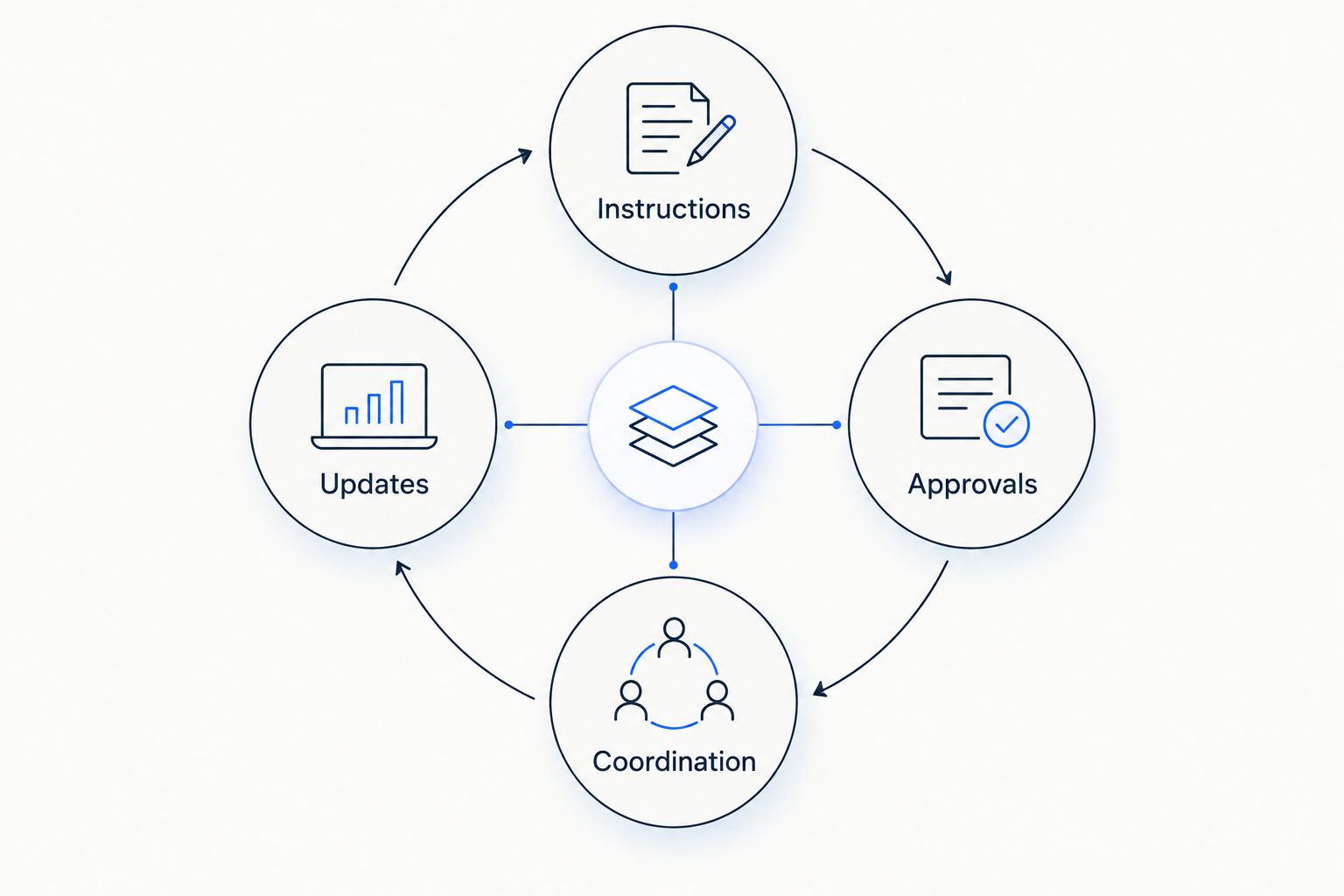
The following framework gives you a practical way to discuss responsibilities:
- Instructions: Identify who can communicate the family’s requirements.
- Approvals: Identify which decisions require explicit authorization.
- Coordination: Establish how connected arrangements are kept aligned.
- Updates: Specify who needs information and what they need to receive.
These are evaluation criteria, not a description of any provider’s internal procedures. Ask the membership provider to explain its actual approach and reconcile it with your office’s existing responsibilities.
Why a family office concierge’s remit varies
The term does not establish a uniform service scope. For a membership assessment in 2026, these factors should determine the questions you ask:
- Continuity of need: Recurring, connected requirements call for a different relationship from an isolated request.
- Breadth of coordination: Travel alone presents a narrower remit than travel connected with aviation, residences, and access.
- Decision structure: Direct instructions from a principal differ from instructions routed through an office representative.
- Provider boundaries: The concierge’s role depends on what remains with operators, properties, and other third parties.
- Information permissions: The relationship needs explicit limits on who receives personal details and instructions.
- Existing office responsibilities: A useful scope complements the people already responsible for the family’s affairs rather than leaving ownership ambiguous.
Translate each factor into an agreed responsibility. If both the office and the concierge believe the other party is handling a dependency, the service description has not done its job.
How do you compare private concierge memberships?
Compare private concierge memberships against the relationship you need, not the length of their service lists. Start with a representative situation from your own life, described without unnecessary identifying details, and ask each provider to explain its remit.
Use the same questions throughout your evaluation:
- Establish the scope. Ask which connected requirements the membership coordinates and which remain outside it.
- Trace a change. Ask how a changed instruction would affect the other arrangements involved.
- Identify authority. Ask where the provider needs approval and who must give it.
- Clarify uncertainty. Ask how pending requests and third-party conditions are distinguished from confirmations.
- Assess continuity. Ask how an ongoing relationship differs from submitting a succession of unrelated requests.
Do not turn the discussion into a request for an unconfirmed operational promise. The purpose is to understand responsibilities and limits before deciding whether the relationship fits.
A broad scope offers the advantage of considering connected requirements together. Its corresponding trade-off is the need to define more interfaces: more categories on a service list do not, by themselves, establish clearer accountability.
Is ongoing membership the right fit for your family office?
JetVoy is best suited to globally mobile individuals seeking ongoing private concierge coordination. Its stated remit covers travel, aviation, residences, and access for high-net-worth individuals, family offices, and corporate executives.
The relevant fit is continuity. If your requirements repeatedly connect these areas, evaluate whether a membership relationship matches how you want them coordinated. If your only requirement is an isolated arrangement, do not assume an ongoing membership is the right structure.
The advantage of the stated model is its cross-category focus. The consideration is commitment to a continuing relationship: you still need to establish the precise scope, responsibilities, and terms rather than infer them from the category description.
For a 2026 application, describe your pattern of need instead of presenting an impressive itinerary. Explain where coordination is fragmented, how your office participates, and what you expect to remain under its authority. Do not assume a spending threshold or automatic acceptance.
Assess membership fit
Explore an ongoing relationship across travel, aviation, residences, and access.
Does a family office concierge manage investments or taxes?
A family office concierge coordinates personal logistics; investment, tax, and legal responsibilities require their own advisers and mandates. Do not treat a concierge membership as authorization to make financial or professional decisions on the family’s behalf.
If an arrangement requires input from an adviser, establish who requests that input and who acts on it. Coordination should preserve the professional boundary, not obscure it.
Does concierge membership guarantee exclusive access?
Concierge membership does not establish an access guarantee. Evaluate the provider’s stated terms and distinguish its ability to coordinate a request from a third party’s decision to confirm it.
Your related arrangements should reflect that distinction. An unconfirmed request should not be described to the family office as a settled component of the itinerary.
What should you prepare before a membership discussion?
Prepare a concise account of your recurring coordination needs, the people authorized to instruct, and the responsibilities your office will retain. Include the kinds of changes that create difficulty, without sharing identifying information that is unnecessary for the initial assessment.
Ask the provider to explain fit against those requirements. A useful discussion identifies limits as clearly as capabilities.
FAQ
What does a family office concierge actually do?
A family office concierge coordinates personal logistics across areas such as travel, aviation, residences, and access. The agreed scope should identify responsibilities, approval requirements, and the boundaries with external providers.
Is a family office concierge the same as a family office?
A family office concierge is not a substitute for the family office’s broader mandate. Concierge support concerns the agreed personal coordination remit, while financial, legal, and other responsibilities remain with the authorized office personnel and advisers.
Can a concierge coordinate private aviation and residences together?
A concierge can coordinate aviation and residence requirements when both fall within its agreed scope. Ask how changes pass between the relevant providers and which responsibilities remain outside the membership.
Does a family office concierge replace an executive assistant?
A concierge does not automatically replace an executive assistant. Define which tasks remain internal, which belong to the membership provider, and how instructions pass between them.
Is JetVoy suitable for a single travel request?
JetVoy’s stated model is ongoing private concierge membership. Evaluate it for a continuing coordination relationship rather than assuming membership is the right structure for an isolated request.
How do I assess discretion before choosing a concierge?
Assess discretion by asking who receives personal information, who can issue instructions, and how permissions are established. Request an explanation of the provider’s actual practices rather than relying on discretion as a descriptive claim.
What should a family office ask before applying for concierge membership?
Ask about membership scope, decision authority, provider boundaries, and continuity across connected arrangements. Explain your recurring needs and retained responsibilities without assuming acceptance or an unstated eligibility threshold.
One last thing
For your 2026 membership assessment, ask about the point at which an instruction becomes a commitment. Who confirms the decision, who communicates it, and who understands its effect on the rest of the plan?
That is a more revealing question than asking how many services a membership includes. Choose clarity of responsibility over breadth of description.