

To travel with household staff in 2026, align each person’s duties, movement, accommodation, and destination requirements before confirming the itinerary. A shared departure does not establish permission to perform household duties abroad; review entry and work requirements separately, then assign responsibility for each handoff and change.
- Travel with household staff requires separate decisions about movement, duties, immigration requirements, and accommodation.
- Keep a shared itinerary, but restrict personal documents and household information to those who need them.
- JetVoy suits individuals seeking ongoing private concierge coordination across travel, aviation, residences, and access.
- Choose shared or staggered movement according to actual duties, not an assumption that everyone must travel together.
How do you travel with household staff and align their roles?
Start with the work that needs to happen, then decide who travels, when they move, and what they need to know. Do not build the staff plan as an appendix to the principal’s itinerary. Staff movements have their own dependencies, including lawful duties, arrival access, rest, and the arrangements for returning home.
JetVoy provides private membership concierge coordination across travel, aviation, residences, and access. That ongoing relationship is relevant when staff movements form part of a wider pattern of household travel, rather than an isolated request.
Use the following sequence to turn a travel outline into an operating plan:
- Define duties. Record what each accompanying person is expected to do at the destination and during transit.
- Check requirements. Obtain destination-specific advice on entry, permitted activities, employment obligations, and relevant documentation.
- Align movement. Decide which staff members need to travel with the household and which need a different arrival or departure.
- Confirm handoffs. Name the person responsible for each transfer, property arrival, and change in responsibility.
- Set change authority. Establish who can approve revised arrangements and who must receive the updated instructions.
The itinerary should reflect responsibilities, not merely place everyone on the same departure. A movement is only ready when the person traveling understands both the journey and the role attached to it.
Why this matters
Household travel brings personal needs and employment responsibilities into the same itinerary. A principal’s revised arrival time can affect a staff member’s transfer, property access, scheduled duties, and rest arrangements. Updating the principal’s calendar does not resolve those connected decisions.
Treat the travel plan and the duty plan as connected documents, not interchangeable ones. The travel plan explains where someone needs to be. The duty plan explains what they are expected to do, who directs that work, and when responsibility passes to someone else.
For your 2026 household travel plan, make those distinctions visible before departure. Precision comes from named responsibilities and confirmed arrangements, not a longer list of informal messages.
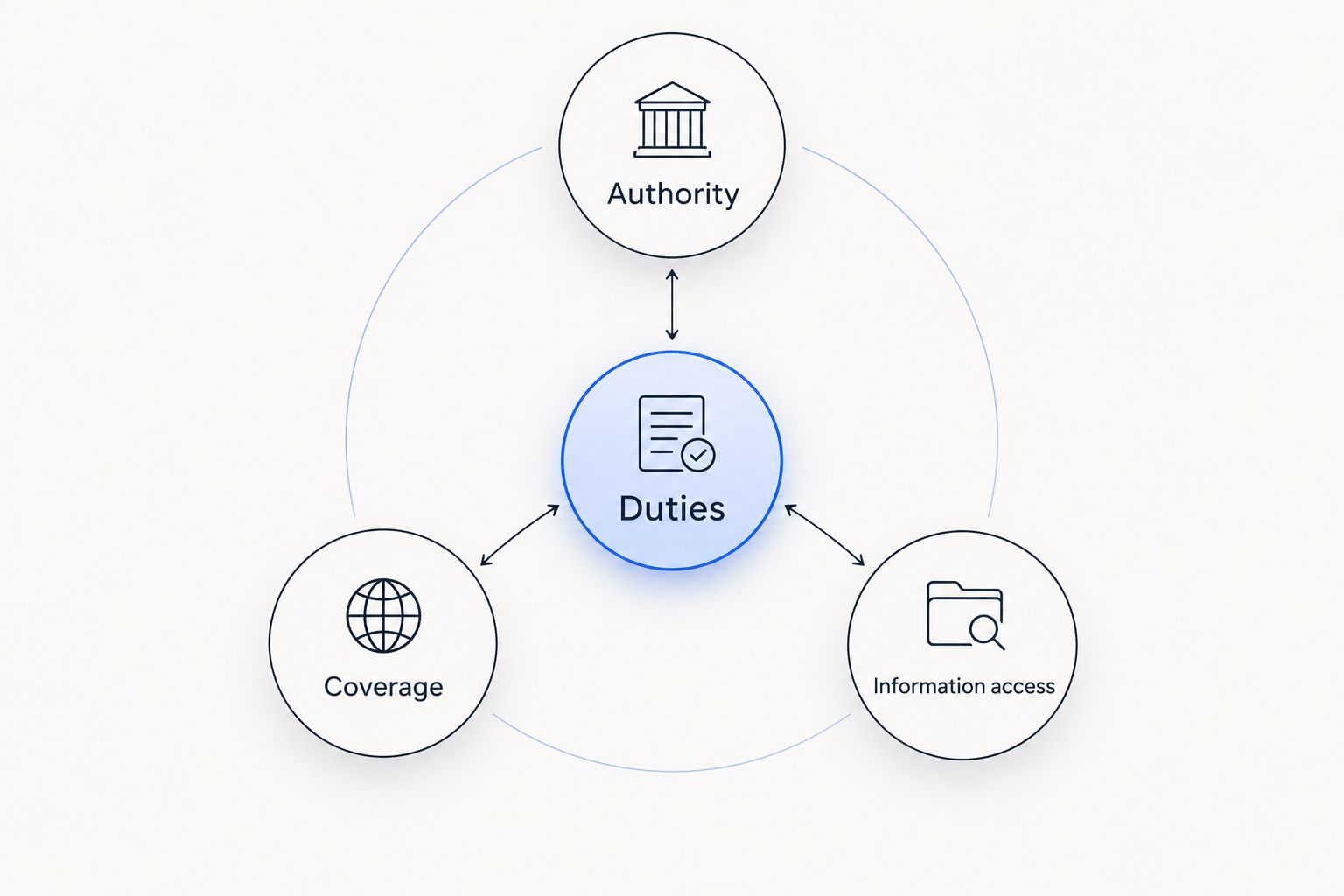
Define roles before arranging movement
Duties
Describe the work expected at each stage of the journey. A role title alone does not explain whether someone is accompanying the household, preparing a residence, supervising a dependent, or maintaining continuity elsewhere.
Use concrete instructions rather than broad phrases such as supporting the family. State where the duty begins, what it includes, and who can alter it. If responsibilities change between destinations, record that change explicitly rather than carrying the original description forward.
Authority
Separate the person receiving a request from the person authorized to approve it. A household employee should not have to infer whether a principal, family-office representative, or another household contact has the final decision.
Name the approval contact and a substitute when that contact is unavailable. Distinguish a routine operational adjustment from a change that affects employment arrangements, personal information, or the household’s wider itinerary.
Coverage
Identify which responsibilities require continuous coverage and which can pause during transit. Then assign the handoff between the person leaving a duty and the person accepting it.
Avoid treating proximity as coverage. A staff member traveling alongside the household does not automatically have a clearly defined responsibility throughout the journey. Make working periods, rest arrangements, and replacement coverage explicit, with appropriate professional advice where required.
Information access
Give each person the information required for their role. A driver needs accurate movement details; that does not automatically create a need for passport copies, employment records, or the household’s complete schedule.
Keep sensitive documents separate from broadly circulated instructions. Establish who can share them, with whom, and for what purpose. Discretion depends on limiting unnecessary circulation as well as choosing appropriate communication channels.
Should household staff travel together or separately?
Choose movement patterns according to the work required before departure, during transit, and after arrival. Neither shared nor staggered travel is automatically the right arrangement. Each solves a different coordination problem and creates a different handoff to manage.
| Movement pattern | Best for | Practical advantage | Limitation to address |
|---|---|---|---|
| Shared movement | Duties that require accompaniment during the journey | Keeps the accompanying role aligned with the household’s movement | Leaves less scope for the same person to prepare the destination before arrival |
| Staggered movement | Duties that must happen before or after the household moves | Separates destination preparation or closeout from accompaniment | Requires separate arrival instructions, access arrangements, and handoffs |
| Mixed movement | Households with both accompanying and destination-based responsibilities | Assigns different movements to different duties | Requires clear boundaries so responsibilities are not duplicated or left unassigned |
Choose shared movement for accompaniment; choose staggered movement when the duty requires a different presence. If you need both, describe the transition between them rather than assuming the household will resolve it on arrival.
For example, if a person must prepare a residence before the household arrives, traveling together does not satisfy that requirement. Either change that person’s movement or assign preparation elsewhere. This is a planning decision, not a reason to promise that staff can absorb incompatible duties.
What should a staff movement brief contain?
A useful brief answers practical questions without distributing the household’s entire personal record. Keep the operational instructions concise and provide sensitive supporting documents only to the people who require them.
- Movement details: Departure and arrival points, confirmed transport instructions, and the contact responsible for changes.
- Role boundaries: Expected duties, reporting contact, and the point at which responsibility begins or ends.
- Arrival access: Who will receive the traveler and how access to the residence will be arranged.
- Accommodation: The confirmed location and the practical connection between accommodation and assigned duties.
- Handoffs: The outgoing and incoming contacts, the responsibility being transferred, and how acceptance is confirmed.
- Exceptions: Who to contact if transport changes, access fails, or instructions conflict.
For each 2026 departure, confirm that the brief reflects the current itinerary rather than a previous visit. Familiar destinations still require current instructions. An old contact, changed arrival arrangement, or outdated duty description is not a usable plan simply because it worked before.
Ask the staff member to confirm understanding, not merely receipt. A document can be delivered without resolving an ambiguous instruction. Questions raised before departure are easier to address than conflicting expectations during a transfer.
Why travel arrangements for household staff vary
The right plan depends on the actual work and the journey. Avoid importing another household’s arrangements without checking whether the same conditions apply.
- Destination requirements: Entry permission and permission to perform duties require destination-specific review. Obtain advice based on the individual and the proposed activities.
- Assigned responsibilities: Accompaniment, advance preparation, and departure closeout require different presence and timing.
- Itinerary changes: A revised arrival can affect transport, accommodation, access, and duty coverage beyond the traveler whose schedule changed.
- Household composition: Responsibilities differ according to who is traveling and the support they require. Define those needs without circulating unnecessary personal detail.
- Residence arrangements: Confirm who controls access, who receives arriving staff, and which responsibilities remain with local providers.
- Employment arrangements: Working expectations, rest, insurance, and employment obligations need review by the appropriate employer representatives and advisers.
For multi-destination travel in 2026, review each stop on its own terms. Do not treat an earlier clearance or arrangement as confirmation for the next destination. Keep the itinerary connected, but keep the necessary checks specific.
What changes when the principal’s itinerary changes?
An itinerary change should trigger a review of affected responsibilities, not just a revised departure message. Start with the people whose work depends on the changed movement, then confirm the arrangements that support them.
Check whether accompanying staff still travel with the household, whether advance staff need revised access, and whether anyone’s return movement conflicts with remaining duties. Review accommodation and coverage at the same time. A changed flight does not explain who now handles the arrival.
Send a clearly identified current version of the operational instructions. Ask affected contacts to acknowledge the changes relevant to them, and withdraw superseded instructions from active use. The objective is a shared understanding, not a larger volume of updates.
When a change crosses into employment, immigration, or contractual questions, refer it to the appropriate qualified adviser. Coordination should connect those decisions; it should not replace professional advice with an assumption made under time pressure.
Is private concierge membership the right fit?
JetVoy is best suited to individuals seeking ongoing private concierge coordination, rather than help with an isolated request. Its stated scope covers global travel, private aviation, residences, and access for high-net-worth individuals, family offices, and corporate executives.
That scope is relevant when household staff movements need to sit within continuing travel arrangements. It does not, by itself, establish which staff-related tasks a membership includes. Before applying, describe the responsibilities you want coordinated and ask how those needs fit the membership scope.
The advantage of an ongoing relationship is the ability to frame travel as a continuing coordination requirement rather than a disconnected request. The limitation is equally clear: membership is not a substitute for the employer’s decisions, destination-specific permissions, or specialist advice.
Assess JetVoy private concierge membership against your actual pattern of movement. If your need ends with a single journey, do not assume an ongoing membership is the appropriate fit. If the need recurs across travel, aviation, residences, and access, explain those connections in your inquiry without disclosing unnecessary personal information.
How do you prepare a qualified membership inquiry?
Describe the coordination problem before listing individual requests. Explain who directs household arrangements, how staff responsibilities intersect with travel, and where decisions currently require separate follow-up.
Outline the destinations and types of movement under consideration, while keeping personal documents out of the initial inquiry. Distinguish established requirements from preferences. This gives a membership discussion a practical basis without suggesting an unconfirmed spending threshold or assuming acceptance.
Ask specifically about scope, responsibilities, communication, and exclusions. Establish which decisions remain with you, which require professional advisers, and which activities the proposed membership would coordinate. A clear boundary is more useful than a broad expectation that every household matter belongs within the service.
FAQ
How do I travel with household staff without confusing responsibilities?
Travel with household staff using a written role and movement brief for each accompanying person. Define duties, approval authority, arrival access, and handoffs before departure.
Can household staff perform their usual duties abroad?
Do not assume household staff can perform their usual duties abroad solely because they can enter the destination. Obtain destination-specific immigration and employment advice for the person and proposed activities.
Should household staff travel on the same itinerary as the family?
Household staff should share the family’s movement when their assigned duties require accompaniment. Use separate movement when preparation, closeout, or other responsibilities require a different presence.
What information should I share with accompanying household staff?
Share the movement details, duties, contacts, and access instructions each person needs. Restrict personal documents and unrelated household information to those with a defined need.
Who should approve changes to staff travel arrangements?
Name an approval contact and a substitute before departure. Distinguish routine movement changes from decisions affecting employment arrangements, sensitive information, or wider household plans.
Does private concierge membership replace immigration or employment advice?
Private concierge membership does not replace immigration or employment advice. Use qualified advisers for those decisions and clarify how their instructions connect with the travel coordination.
Is JetVoy suitable for ongoing travel with household staff?
JetVoy suits individuals evaluating ongoing private concierge coordination across travel, aviation, residences, and access. Confirm the scope of any household-staff coordination during the membership discussion rather than assuming inclusion.
One last thing
Before your next 2026 departure, ask each responsible contact the same question: what happens if the arrival changes? Compare the answers. If they assign the same duty to different people, or leave it unassigned, resolve that disagreement before the journey begins.
The most useful final check is not whether everyone has the itinerary. It is whether everyone understands the same handoff.