

Align private aviation with ground transfers by assigning one coordination lead, confirming the actual passenger handoff location, and updating the driver against flight progress rather than the original itinerary. The aircraft’s arrival time is not the passenger’s vehicle departure time; arrival procedures, luggage, and local access arrangements sit between them. A workable plan connects those dependencies before travel and defines who communicates changes.
- Private aviation ground transfer coordination needs one accountable lead, a confirmed handoff location, and updates tied to flight progress.
- Separate aircraft arrival from passenger readiness; the driver needs the handoff time, not just the flight time.
- JetVoy suits individuals seeking ongoing private concierge coordination across travel, aviation, residences, and access.
- Confirm terminal access, luggage requirements, and the receiving destination before treating a transfer as settled.
Why this matters
A flight and a vehicle can each have accurate instructions yet still fail to connect. An aircraft arrival estimate does not establish which exit passengers will use, whether the driver can approach it, or when luggage will be ready.
For your 2026 travel plans, assess the transition rather than each arrangement in isolation. The useful question is not simply whether a vehicle is assigned. It is whether everyone responsible for the handoff is working from compatible instructions.
JetVoy provides private membership concierge coordination across travel, aviation, residences, and access. That ongoing relationship is relevant when you need continuity across repeated journeys, rather than help with an isolated transfer.
How do you align private aviation with ground transfers?
Use one coordination lead to connect the aviation contact, ground transport provider, passenger representative, and receiving destination. Keep responsibility distinct from execution: the lead coordinates the handoff, while each provider confirms the arrangements within its control.
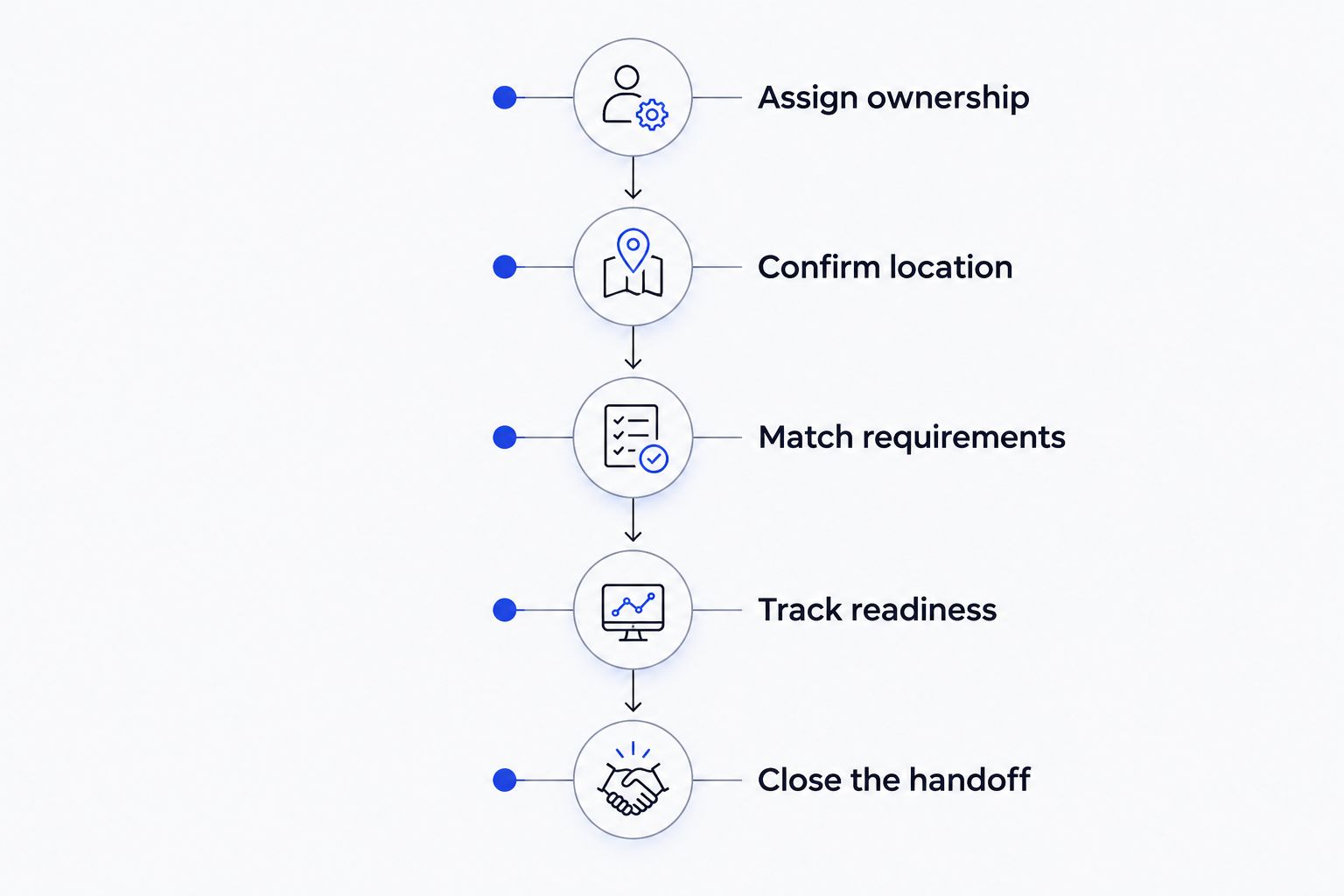
Use this sequence for your 2026 coordination brief:
- Assign ownership. Name the person responsible for reconciling changes across the flight and transfer.
- Confirm location. Establish the handling facility, passenger exit, permitted meeting point, and driver access instructions.
- Match requirements. Confirm passenger numbers, luggage, accessibility needs, and vehicle requirements with the transport provider.
- Track readiness. Separate flight progress from passenger readiness and agree which updates the driver needs.
- Close the handoff. Confirm passengers have connected with the vehicle and notify the receiving destination when necessary.
These are coordination steps, not a promise that every airport permits the same handoff. Ask the relevant aviation and ground contacts to confirm local arrangements before giving passengers final instructions.
Arrivals: coordinate around passenger readiness
For an arrival, give the ground provider enough information to identify the correct flight movement and handling location. Confirm which aviation contact can communicate a change and which ground contact will acknowledge it.
Then separate the milestones. An aircraft landing, arriving at its handling position, and passengers being ready to leave are different events; do not turn them into a single pickup instruction.
Before the driver approaches the meeting point, establish:
- Whether the aircraft’s arrival information has changed.
- Whether the handling facility or passenger exit remains correct.
- Whether any applicable arrival formalities are complete.
- Whether passengers and luggage are ready to move together.
- Whether the driver has permission and instructions to reach the agreed point.
Best for arrival transfers: instructions tied to passenger readiness, with flight progress used to prepare the vehicle. This avoids treating an estimated landing time as a confirmed passenger departure time.
Do not promise an aircraft-side meeting unless the responsible local parties have confirmed it. A precise landside meeting point is more useful than an impressive-sounding arrangement that nobody has authorized.
Departures: coordinate backward from the aviation handoff
For a departure, ask the aviation contact to confirm the required passenger arrival instructions. Use those instructions to set the ground departure plan, accounting for the route, luggage handling, and any passenger requirements.
Avoid choosing the vehicle departure time from the flight time alone. The destination is the confirmed aviation handoff point, not simply the airport named on the itinerary.
Confirm the pickup address in enough detail for the driver to find the correct entrance. At a residence or hotel, identify who will tell the driver that passengers are ready and who will communicate a delayed departure.
Best for departure transfers: a ground plan built backward from confirmed aviation instructions. Its limitation is that it still depends on timely information from the passenger side; a correct route cannot resolve an uncommunicated delay.
| Coordination point | Arrival transfer | Departure transfer |
|---|---|---|
| Best for | Connecting arriving passengers with the vehicle | Delivering passengers to the aviation handoff |
| Main timing reference | Passenger readiness after arrival | Required arrival instructions from the aviation contact |
| Location to verify | Handling facility, exit, and permitted meeting point | Pickup entrance and aviation drop-off point |
| Useful strength | Distinguishes flight progress from pickup readiness | Connects the ground journey to departure requirements |
| Main limitation | Passenger readiness is not established by landing alone | Passenger departure delays must reach the aviation contact |
| Completion check | Passengers and luggage are with the vehicle | Passengers reach the agreed aviation handoff |
What belongs in your 2026 transfer brief?
Keep one current brief for the people responsible for the movement. It should contain enough information to execute the handoff without distributing unnecessary personal details.
Include the flight reference used by the aviation contact, the handling location, the ground provider’s operational contact, the passenger-side contact, and the confirmed meeting instructions. Add the passenger count and luggage requirements as confirmed for that journey, not copied without checking from an earlier itinerary.
Separate confirmed information from items awaiting confirmation. If access permission is unresolved, say so in the working brief rather than presenting aircraft-side collection as settled.
Use three readiness checks before finalizing passenger instructions:
- Location confirmed: both sides identify the same physical handoff point.
- Requirements confirmed: the ground provider has acknowledged the passenger and luggage requirements.
- Communication confirmed: the responsible contacts know how changes will reach them.
This brief is a coordination document, not a replacement for provider instructions. Keep the information necessary for the handoff visible, and resolve conflicting instructions with the party responsible for the relevant operation.
Why private aviation ground transfer coordination varies
The handoff depends on the journey, the airport, and the passengers. Use these factors to decide what needs explicit confirmation rather than assuming that a previous transfer provides a complete template.
- Handling location. Confirm the facility serving the actual movement; an airport name alone does not identify the passenger exit.
- Access permissions. Ask where the vehicle is permitted to meet passengers and what the driver needs to do before approaching.
- Arrival formalities. Establish whether applicable entry procedures affect when passengers can leave.
- Passenger and luggage requirements. Have the transport provider confirm that the assigned arrangement meets the stated requirements.
- Ground route and destination. Confirm the correct entrance, receiving contact, and any arrival instructions at the destination.
- Schedule changes. Decide who communicates a changed flight movement, pickup location, or passenger departure time.
Do not turn these factors into a universal buffer. A fixed interval without local confirmation gives the appearance of precision without establishing whether the transfer works.
Who should own changes during the journey?
One coordination lead should own the consolidated handoff plan. Aviation and ground providers remain responsible for confirming their respective arrangements; the lead makes sure a change on one side reaches the other.
Define the communication route before departure. If the aviation contact changes the handling location, the ground provider needs to acknowledge the revised instruction. Forwarding a message is not the same as confirming that the driver is following it.
For your 2026 travel brief, distinguish an operational contact from a passenger-facing contact. Passengers need clear instructions about where to go and whom to contact, not every exchange between providers.
If responsibility moves between representatives, make that handover explicit. Name the incoming contact and identify unresolved items so that a change of personnel does not leave an unanswered question without an owner.
How do you handle a diversion or changed arrival airport?
A changed arrival airport requires a fresh ground-transfer confirmation. Do not assume that the original vehicle, driver access instructions, or meeting point carries over to the revised location.
First, confirm the revised aviation location with the responsible aviation contact. Then have the ground provider confirm what arrangement can serve it, establish the new handoff point, and update the passenger instructions.
Finally, tell the receiving destination about the revised ground arrival plan when it affects access or reception. Treat the change as a connected sequence, not simply an amended airport name in a message.
When does ongoing private concierge membership fit?
JetVoy private concierge membership is best suited to individuals seeking ongoing coordination across travel, aviation, residences, and access. The relevant distinction is continuity across those needs, not whether a particular journey uses a private aircraft.
Assess your own pattern. Do you repeatedly need separate providers to act on the same changing itinerary? Does a change to aviation affect a residence arrival or another arrangement? Those dependencies make an ongoing coordination relationship relevant to evaluate.
The limitation is fit: an isolated transfer request does not, by itself, establish a need for continuing membership. Nor does interest in membership imply acceptance, a particular access outcome, or permission to bypass local procedures.
When discussing membership in 2026, describe the recurring coordination needs rather than presenting only a destination list. Explain who travels, which arrangements depend on each other, and where you want continuity; avoid sending sensitive personal documentation before the appropriate handling process is established.
FAQ
What is the most important part of private aviation ground transfer coordination?
One accountable coordination lead is the starting point for private aviation ground transfer coordination. That person connects confirmed aviation instructions, ground-provider arrangements, and passenger readiness without taking over each provider’s operational responsibilities.
Should my driver arrive when the private aircraft lands?
Landing time alone is not a complete pickup instruction. Agree how flight progress will prepare the driver and how passenger readiness will trigger the final handoff.
Can a driver collect passengers beside a private aircraft?
Aircraft-side collection requires confirmation from the responsible local parties. If that arrangement is not confirmed, establish a precise permitted meeting point and give passengers clear instructions.
How much extra time should I allow for a private aviation transfer?
Use timing confirmed for the specific journey rather than a universal buffer. Ask the aviation and ground contacts to account for the handoff location, applicable procedures, passenger requirements, and ground route.
What should happen if my private flight changes airports?
A changed airport requires renewed confirmation of the ground arrangement and meeting point. Update passenger instructions only after the responsible providers have confirmed the revised handoff.
Is JetVoy suitable if I only need an airport transfer?
JetVoy is a private membership concierge service centered on ongoing coordination across travel, aviation, residences, and access. A single airport transfer is not, by itself, a reason to choose a continuing membership relationship.
One last thing
Ask a specific question before travel: Who confirms that the passenger handoff is complete? That answer exposes whether your plan ends at an aircraft arrival estimate or continues until passengers and luggage reach the next responsible party.
A vehicle assignment is an arrangement. A confirmed handoff is the outcome your coordination plan should track.