

Concierge membership onboarding works by assessing ongoing fit, agreeing the coordination scope, setting decision authority, and preparing a working handover. Before sharing sensitive information or making a first request, confirm the membership terms and information-handling arrangements; an application does not mean automatic acceptance.
- Concierge membership onboarding should establish an ongoing working relationship, not simply collect a first request.
- JetVoy suits individuals evaluating continuous private concierge coordination across travel, aviation, residences, and access.
- Confirm decision authority, information handling, and membership scope before sharing sensitive details.
- Assess private concierge membership fit through recurring coordination needs, not a single exceptional occasion.
How does concierge membership onboarding work?
Treat onboarding as a sequence of decisions rather than a form to complete. The objective is to establish whether an ongoing private concierge relationship fits your needs, then clarify how that relationship should operate.
JetVoy describes its private membership concierge service around coordination across global travel, private aviation, exceptional residences, and exclusive access. Use those areas to frame your questions, rather than assuming every request falls within a membership.
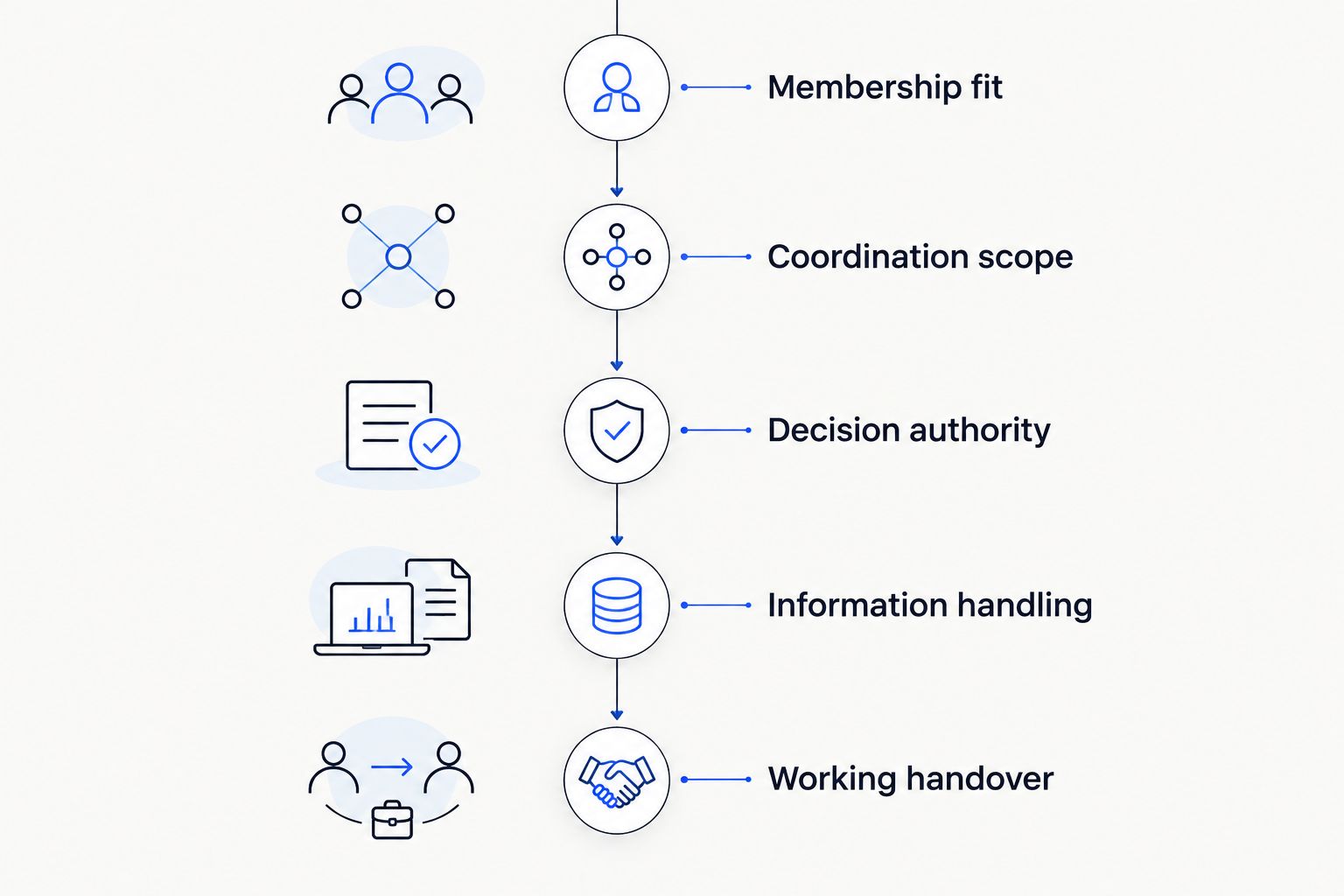
For a membership assessment in 2026, work through the following sequence. These are evaluation steps, not a statement of any provider’s specific onboarding procedure.
- Membership fit: Explain why you need an ongoing relationship rather than help with an isolated request.
- Coordination scope: Identify which areas need coordination and where responsibilities should begin and end.
- Decision authority: Establish who can request, approve, change, or decline an arrangement.
- Information handling: Agree what information is necessary and how you should provide it.
- Working handover: Confirm how an accepted membership moves from initial discussions into ongoing coordination.
The sequence matters. Sharing extensive personal information before establishing fit creates disclosure without first establishing purpose.
Why this matters
A flight preference is not the same as permission to change a flight. A residence preference is not approval to commit to a particular residence. Onboarding should separate what you like from what someone is authorized to do on your behalf.
That distinction becomes especially important when an individual, an assistant, and a family office participate in the same relationship. Good onboarding makes responsibilities explicit; a detailed preference profile alone does not.
When evaluating membership in 2026, look beyond the range of services described. Ask whether the initial discussion helps you understand the proposed working relationship, including its limits.
Start with membership fit
Describe the recurring coordination problem you want to address. That might involve travel connected to executive commitments, aviation coordinated with residence requirements, or access requests that must fit a wider itinerary. Present these as your circumstances, not as assumptions about what a provider will accept.
A useful application explains the relationship you are seeking. Distinguish ongoing needs from the immediate occasion that prompted your interest. If a single upcoming journey is your only requirement, say so rather than presenting it as a continuing pattern.
JetVoy is best suited to individuals evaluating ongoing private concierge coordination across travel, aviation, residences, and access. That positioning is about the nature of the relationship, not an implied spending threshold or a promise of acceptance.
Prepare a concise account of:
- Which areas require continuing attention.
- Who is involved in decisions.
- What currently requires repeated explanation.
- Which responsibilities you want to retain.
- What would make an ongoing relationship useful to you.
Avoid submitting a long wish list without context. A list of destinations or experiences says little about how you want a membership to function.
Agree the coordination scope
Discuss travel, aviation, residences, and access separately before considering how they connect. Your need for coordination across these areas does not establish that every individual request is included or achievable.
For travel, explain the commitments that determine your movements. For private aviation, describe the role aviation plays in your wider plans. For residences, identify the requirements that affect suitability. For access, explain its relationship to the rest of your schedule.
Then discuss dependencies. If an arrival changes, what other arrangements need review? If a residence changes, which transfers or commitments need reconsideration? These questions expose the coordination requirement without presuming a particular operational promise.
Ask the provider to distinguish:
- The areas covered by the proposed relationship.
- Requests that require separate assessment.
- Decisions that remain with you.
- Matters that depend on another provider’s confirmation.
Coordination scope is not an access guarantee. Keep those concepts separate throughout the membership discussion, particularly when an important occasion depends on an external party.
Establish decision authority
Identify the member, the person communicating day to day, and anyone whose approval is required. Those roles can overlap, but do not leave that overlap implicit.
For a family office, specify which matters should reach the principal and which should remain with an authorized representative. For a corporate executive, clarify the distinction between personal preferences and organizational approval requirements. Describe your actual arrangement rather than adopting a structure that does not fit.
Use practical questions to establish the boundaries:
- Who can introduce a request?
- Who can approve a proposed arrangement?
- Who can authorize a change?
- Who should receive sensitive updates?
- What should happen when instructions conflict?
Ask how those permissions should be recorded and updated. Do not assume that being copied into a conversation gives someone authority to make decisions.
This part of concierge membership onboarding deserves more attention than a preference questionnaire. A provider can understand your preferences and still need explicit approval before acting.
Agree information handling before disclosure
Begin with the purpose of each information request. Ask what is needed for the membership assessment and what should wait until a specific coordination requirement arises.
Separate preferences from sensitive records. A general preference about accommodation is different from an identity document, a detailed movement schedule, or information about another person. Do not treat them as interchangeable simply because they relate to travel.
For your 2026 membership review, ask about the submission method, who receives information, how corrections are made, and what happens when the relationship ends. Seek direct answers rather than inferring practices from a statement about discretion.
Useful questions include:
- Why is this information needed now?
- Who needs access to it?
- How should another person’s details be provided?
- How can outdated information be corrected?
- What information should not be sent through ordinary correspondence?
Discretion is something to discuss in practical terms, not simply a word to accept. Follow the provider’s confirmed instructions and avoid sending sensitive records through an unconfirmed channel.
Prepare the working handover
After acceptance and agreement on the relationship, distinguish enduring preferences from current instructions. An enduring preference provides context; a current instruction applies to a particular situation. Neither should silently substitute for the other.
Organize the handover around what needs attention now, what remains unresolved, and what requires your approval. Include existing commitments that affect the proposed coordination, without assuming responsibility has transferred merely because you mentioned them.
Ask how the provider wants you to submit changes. Also establish how you will recognize that a proposed arrangement has been approved rather than merely discussed.
A useful handover should let you answer:
- What is currently under consideration?
- What has been agreed?
- What still requires a decision?
- Who owns the next action?
For a relationship starting in 2026, review whether the information supplied still reflects your circumstances before treating onboarding as complete. An accurate handover matters more than an elaborate profile.
Why concierge membership onboarding varies
The right discussion depends on the relationship you are seeking. Use these factors to decide where your assessment needs greater precision:
- Travel: Explain whether travel is the central requirement or one part of a wider coordination relationship.
- Private aviation: Clarify how aviation requirements connect with your other commitments and approvals.
- Residences: Identify the residence requirements that need to be considered alongside your movements.
- Exclusive access: Distinguish an access request from a confirmed commitment and discuss its dependencies.
- Member context: Explain whether you are applying as an individual or coordinating through a family office or executive support structure.
These factors help define the questions to ask. They do not establish a provider’s eligibility criteria, response commitments, or acceptance decision.
Is ongoing membership right for a single request?
Ongoing membership fits an ongoing relationship; a single request does not by itself establish that fit. Explain the immediate need honestly, then discuss whether there is a continuing coordination requirement beyond it.
The comparison below concerns your needs, not named providers or membership tiers.
| Relationship need | Best for | Advantage | Limitation |
|---|---|---|---|
| Ongoing private concierge membership | Individuals seeking continuing coordination | Creates a basis for discussing connected requirements over time | Requires agreement on continuing scope, authority, and information sharing |
| An isolated request | Individuals with one defined objective | Keeps the immediate requirement clear | Does not by itself define an ongoing membership relationship |
Neither approach is automatically better. Choose the relationship that matches the requirement, rather than expanding the requirement to justify membership.
What should you prepare before applying?
Prepare a concise description of your ongoing needs, the people involved, and the decisions you want help coordinating. Keep sensitive supporting records separate until you receive confirmed instructions for providing them.
For JetVoy private concierge membership, frame that description around the relevant combination of travel, aviation, residences, and access. Explain the connections between them; do not manufacture a need across every area.
A qualified application is specific about purpose. It does not need an invented spending figure, an exaggerated schedule, or an assumption that membership will be accepted.
How should you assess the onboarding conversation?
Assess whether the discussion makes the proposed relationship clearer. You should be able to distinguish scope from aspiration, preferences from approvals, and an application from acceptance.
A polished conversation is not a substitute for clear terms. Before proceeding, resolve the questions that would otherwise create uncertainty during a live request.
FAQ
What happens during concierge membership onboarding?
Concierge membership onboarding should establish fit, scope, decision authority, information handling, and the working handover. Confirm the provider’s actual sequence rather than assuming every membership follows the same procedure.
Does submitting a concierge membership application mean I am accepted?
Submitting an application does not mean automatic acceptance. Treat the application, any assessment, and confirmation of membership as distinct stages unless the provider explicitly states otherwise.
What should I tell a private concierge membership provider first?
Start with the ongoing coordination requirement and who is involved in decisions. Explain how travel, aviation, residences, or access relate to that requirement without sending unnecessary sensitive records.
Should my assistant or family office join the onboarding discussion?
Include an assistant or family office representative when that person will participate in the relationship. Clarify communication permissions and decision authority rather than assuming attendance grants approval rights.
Should I send identity documents with my first inquiry?
Confirm the purpose and submission method before sending identity documents. Ask which information is needed for the assessment and which should wait for a specific requirement.
Is JetVoy membership intended for ongoing coordination?
JetVoy describes a private membership concierge service coordinating global travel, private aviation, exceptional residences, and exclusive access. Evaluate it around an ongoing relationship rather than assuming a single request establishes membership fit.
How do I know when concierge onboarding is complete?
Ask for confirmation that membership status, scope, permissions, and the working handover are agreed. Completing a questionnaire alone does not answer those questions.
One last thing
Before completing your 2026 concierge membership assessment, ask a simple question: what happens when a standing preference conflicts with a current instruction?
The answer should clarify who decides and how that decision is communicated. That is a more useful test of the proposed relationship than the length of a preference profile.