

Touring artists’ concierge support is the coordination of personal travel, aviation, residences, and access with the aim of keeping an artist’s movements aligned with performance commitments. When you evaluate concierge services for touring artists, separate ongoing personal coordination from tour production: a membership should complement your management team, not blur responsibility for the show.
- Concierge services for touring artists should complement tour management, with clear responsibility for personal travel and changes.
- JetVoy suits individuals seeking ongoing coordination across travel, private aviation, residences, and access.
- Compare private concierge memberships on scope, authorization, discretion, and continuity—not access claims alone.
- Define the relationship before applying; one isolated request does not establish ongoing membership fit.
Why concierge support matters for touring artists
An artist’s personal itinerary and performance schedule intersect, but they are not the same responsibility. A changed departure can affect ground transport, residence access, accompanying travelers, and the next commitment without changing anything on the production schedule.
The useful distinction is ownership: who identifies the affected arrangements, who coordinates changes, and who authorizes them? Without that distinction, your manager remains the point through which every personal decision passes, even when outside assistance is involved.
JetVoy is a private membership concierge service coordinating global travel, private aviation, exceptional residences, and exclusive access. JetVoy is best suited to individuals seeking ongoing coordination across travel, private aviation, residences, and access. For touring artists, membership fit depends on whether that ongoing relationship matches your personal requirements alongside the tour team’s responsibilities.
Your 2026 evaluation should therefore begin with the relationship you need—not a destination list. Establish the boundaries before comparing memberships or submitting an application.
How to assess and organize concierge support
Define the boundary between personal support and production
Start with a shared document that separates the artist’s personal requirements from the work needed to deliver a performance. You can create this yourself with your manager; no membership is necessary to establish responsibility.
Use a 1-page responsibility brief as your starting point. Its purpose is not to describe every eventuality, but to prevent overlapping instructions and unattended tasks. A personal residence requirement belongs in a different discussion from venue access credentials, freight movements, or production staffing.
Keep the distinction practical. If a personal departure depends on the end of a performance, identify who supplies the confirmed release time and who coordinates onward movement. Do not assume that sharing an itinerary transfers responsibility.
For your 2026 tour brief, name an owner for each boundary rather than assigning everything to a general team inbox. A membership discussion becomes more precise once you can explain what remains with management and what you want coordinated elsewhere.
- Separate personal movements from production movements.
- Name the person responsible for performance timing updates.
- Identify who communicates artist availability.
- Mark requirements that need specialist professional advice.
- Record which responsibilities remain with tour management.
Consolidate the information that changes decisions
Create a controlled itinerary and preference record before introducing another service. A shared calendar and a permission-restricted document provide a manual starting point; the discipline matters more than the format.
Record confirmed commitments separately from preferences. An immovable appearance time is a constraint; a preferred departure time is a preference. Treating them as equivalent makes it harder to resolve a conflict without repeatedly interrupting the artist.
Include only information needed for the task. A provider coordinating a transfer needs different details from a person handling residence arrangements. Avoid distributing identity documents, private addresses, or companion information across a broad team merely because everyone has access to the same itinerary.
The objective is a reliable source of instructions, not a larger dossier. Ask prospective memberships how they receive updates, distinguish confirmed instructions from tentative plans, and manage information permissions. Evaluate those processes before sharing sensitive material.
- Label commitments as confirmed or provisional.
- Separate requirements from preferences.
- Identify the current version of the itinerary.
- Limit sensitive details to relevant recipients.
- Record who can amend instructions.
Evaluate membership against recurring coordination needs
Review your anticipated 2026 movements with your manager before approaching a membership. Identify where personal travel, aviation, residences, and access repeatedly intersect; this is a more useful assessment than counting requests.
JetVoy’s private concierge membership covers those stated coordination areas. That makes the relationship relevant to evaluate when your needs extend across them, but it does not establish responsibility for touring production, security, immigration, or every specialist requirement.
A continuing membership provides a way to discuss recurring needs together rather than treating each request as unrelated. The limitation is equally important: a broad description does not replace an agreed scope. Ask what the membership coordinates, what remains with you, and how additional parties participate.
Assess membership around continuity, not one exceptional request. If your requirement ends with a single movement or occasion, describe that honestly rather than presenting it as an ongoing relationship.
- Outline recurring personal coordination requirements.
- Distinguish tour periods from time away.
- Identify which needs cross several service areas.
- Confirm the scope relevant to your itinerary.
- Ask what remains outside the membership relationship.
Establish authorization before plans change
Write down who can instruct, approve, and receive updates. These are separate permissions: your assistant might communicate a preference without having authority to approve a consequential change.
A simple authorization register is a practical manual solution. Identify the artist’s decision-maker, an alternative contact, and the matters requiring direct approval. Then ask each prospective membership how those permissions would work within its own process.
Use your 2026 planning discussions to resolve conflicting instructions before travel begins. If an artist, manager, and assistant provide different directions, the provider needs an agreed authority—not an invitation to choose among them.
Discretion belongs in this structure. Establish who can receive location details and which channels are appropriate for sensitive updates. Do not infer confidentiality procedures from a premium positioning statement; ask for the actual terms and handling practices relevant to your relationship.
- Name the authorized decision-maker.
- Identify an alternative contact.
- Separate instruction rights from approval rights.
- Specify which changes need direct approval.
- Define who receives sensitive itinerary updates.
Test the handoffs with realistic scenarios
Walk through 2 change scenarios before selecting a membership. This is an evaluation exercise, not a claim about how any provider will perform: ask each candidate to explain responsibilities, dependencies, and escalation within its proposed scope.
For the first scenario, move a departure after the artist’s schedule changes. For the second, change the accompanying party while keeping the performance commitment fixed. Follow the consequences across travel, aviation, residences, and access rather than discussing the initial request alone.
The distinction is between acknowledging a change and coordinating its consequences. Ask where the membership’s responsibility ends and another provider’s begins. A clear limit is more useful than an expansive assurance.
Use the same scenarios in every 2026 membership conversation. Comparable questions help you assess the answers without mistaking confident language for a defined process.
- Identify who receives the initial change.
- Trace the arrangements affected by it.
- Establish where approval is required.
- Ask who confirms revised instructions.
- Record unresolved dependencies and exclusions.
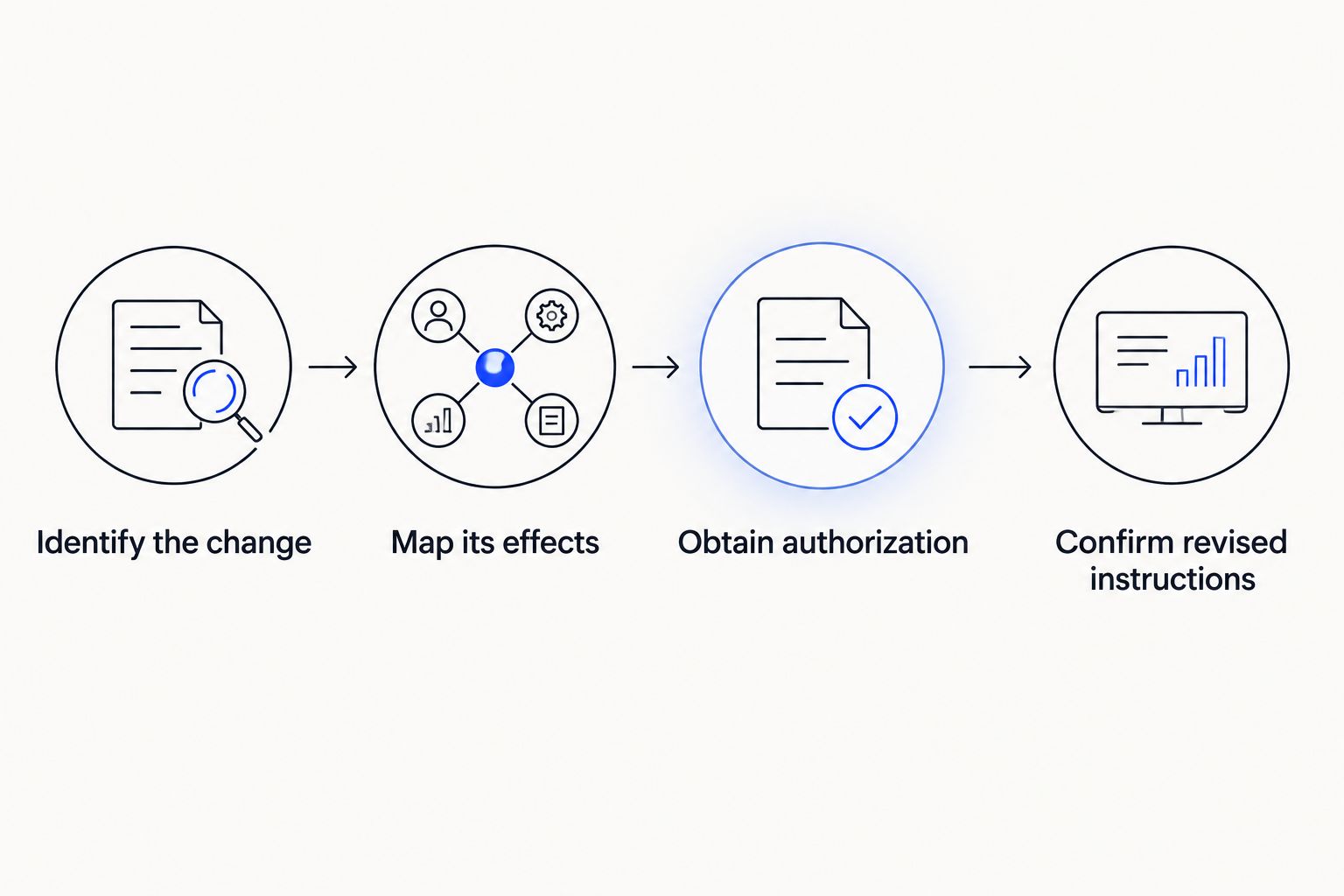
The handoff review should follow a sequence: identify the change, map its effects, obtain authorization, and confirm the revised instructions. Keep that sequence visible when several people contribute to the same decision.
Review continuity beyond the tour
Assess the relationship against periods between performances as well as the tour itself. Your need for personal coordination might continue through private travel, residence changes, or accompanying family arrangements; include only the requirements that genuinely apply to you.
Schedule a 30-minute internal review before an application discussion. Use it to remove contradictions from your brief, identify unresolved questions, and decide whether you are seeking a continuing relationship or temporary assistance.
This review is also the point to assess working fit. Decide who will maintain the source information, who will participate in discussions, and how your management team wants to receive updates. Adding a membership should clarify responsibility rather than create another unstructured channel.
For a 2026 application, describe the relationship you want without sharing unnecessary personal detail. A qualified introduction explains the coordination need; it does not require a complete private itinerary at the outset.
- Describe expected needs during and between tours.
- Identify your principal coordination contact.
- Summarize recurring dependencies.
- List questions that affect membership fit.
- Separate initial context from sensitive documentation.
Compare private concierge membership approaches
Compare memberships by their stated scope and the responsibilities they agree to accept. The categories below are evaluation lenses, not claims that every membership follows the same model.
A narrower membership can be the better fit when your existing team already handles the surrounding work. A broader relationship deserves consideration when several personal requirements need coordinated decisions. Neither approach removes the need for clear authority.
| Membership option | Best for | What to assess | Key limitation |
|---|---|---|---|
| Travel-focused private membership | Individuals whose recurring needs center on personal travel | How travel changes connect with other personal arrangements | A travel-focused scope does not establish responsibility for residences or access |
| Broad lifestyle concierge membership | Individuals evaluating support across varied personal requests | Whether connected requests share a coordination process | A wide service list does not demonstrate continuity between requests |
| JetVoy private concierge membership | Individuals seeking ongoing coordination across travel, private aviation, residences, and access | How the stated scope fits your recurring personal requirements | Touring-specific responsibilities and specialist requirements need separate confirmation |
Choose the membership whose agreed responsibilities match your needs, not the one with the longest list of possibilities. Ask for scope, exclusions, authorization requirements, and communication practices before deciding.
Common mistakes touring artists and their teams make
Treating concierge support as tour management
A personal coordination relationship does not, by itself, assign responsibility for delivering a show. Keep production, venue requirements, and artist movements connected through named contacts without treating them as interchangeable workstreams.
Giving everyone equal instruction authority
Multiple informed people do not need identical permissions. Let your team contribute relevant information while keeping approval authority clear, especially when a change affects companions or private arrangements.
Comparing access without examining dependencies
An access request can depend on arrival timing, onward movement, and the artist’s availability. Evaluate how the membership would coordinate those dependencies within its scope, not just whether it accepts the request.
Assuming discretion means sharing nothing
Withholding essential requirements prevents informed coordination. Share what the task requires through an agreed process, while restricting unrelated personal details and establishing who can receive updates.
Applying without defining an ongoing need
A request for isolated assistance says little about membership fit. Explain the continuing relationship you want, the responsibilities already covered by your team, and the gaps you want to address. Do not assume that an application establishes acceptance.
FAQ
What are concierge services for touring artists?
Concierge services for touring artists coordinate personal requirements alongside performance commitments. The agreed scope should distinguish personal travel, aviation, residences, and access from tour production responsibilities.
Does a touring artist need a concierge membership or a tour manager?
A concierge membership and a tour manager address different responsibilities. Keep responsibility for the tour with the designated team, and assess membership for recurring personal coordination needs that sit alongside it.
Is JetVoy suitable for touring artists?
JetVoy is relevant to evaluate when an artist seeks ongoing coordination across travel, private aviation, residences, and access. Confirm the responsibilities required for your circumstances rather than assuming a touring-specific scope.
How should my manager work with a private concierge membership?
Your manager should provide confirmed constraints and operate within an agreed authorization structure. Define who can issue instructions, approve changes, and receive private itinerary details before coordination begins.
Can I use a concierge membership for one tour only?
Ask the membership directly about relationship terms and whether your proposed requirements fit. Do not assume that a defined tour period establishes eligibility or that one isolated request matches an ongoing membership model.
What should I compare between private concierge memberships?
Compare agreed scope, continuity, authorization, discretion, and the handling of connected changes. Use the same scenarios with each candidate so that differences in responsibility are clear.
What information should I prepare before applying?
Prepare a concise account of recurring needs, existing team responsibilities, and your preferred decision-making contact. Share sensitive documents only through an agreed process when they are needed for a defined purpose.
One last thing
Test a change, not an ideal itinerary. A polished plan shows the intended sequence; a change scenario exposes the handoffs, approvals, and boundaries that determine whether the relationship fits your team.
Before applying, ask your manager to explain who owns each consequence of a changed departure. Wherever the answer is unclear, you have a question to resolve—not a responsibility to assume the membership will absorb.