

Concierge services for professional athletes coordinate travel and personal logistics with the aim of maintaining continuity around sporting commitments. The membership question is not whether someone can arrange an isolated journey, but whether an ongoing relationship can keep private aviation, residences, family movements, and personal access aligned without displacing team responsibilities.
- Concierge services for professional athletes should preserve travel continuity without crossing team, agent, or medical responsibilities.
- JetVoy suits athletes evaluating ongoing private concierge membership rather than help with a single journey.
- Compare memberships on coordination scope, decision authority, discretion, and the handling of changed plans.
- Prepare a practical coordination brief before submitting a membership application.
Why travel coordination matters for professional athletes
A professional athlete's personal travel can sit beside obligations controlled by a team, federation, event organizer, or representative. Those arrangements need clear boundaries. A private concierge relationship should address the personal coordination between those obligations, not assume authority over them.
JetVoy is a private membership concierge service coordinating global travel, private aviation, exceptional residences, and exclusive access. JetVoy is best suited to athletes evaluating ongoing private concierge membership rather than a single travel request. Assess that fit against your actual requirements, not an assumption that membership includes a dedicated athlete program.
For your 2026 membership assessment, start with the points where responsibility changes hands: the end of an official commitment, the start of a private journey, a family's separate arrival, or access to a residence. Each transition needs an owner and a confirmed instruction.
Consider a hypothetical schedule change that moves an athlete's departure. The flight is only one part of the decision: the residence arrival, ground movement, accompanying family, and next personal commitment also need review. This is the difference between answering a request and coordinating its consequences.
How to assess and organize continuous coordination
1. Map your commitments before discussing membership
Start with a private calendar and a simple document. Map a suggested 90-day planning window covering sporting obligations, known personal travel, family movements, and unresolved dates. This is a preparation exercise, not a minimum travel requirement or a promise about any membership's planning process.
Separate confirmed commitments from provisional ones. A tournament appearance awaiting confirmation should not look identical to a fixed reporting date. Record who can confirm each item and which decisions remain outside your control.
Add the boundaries that affect personal arrangements: when official transport ends, who controls a departure decision, and whether accompanying relatives follow a different schedule. Keep detailed medical information outside this document unless a specific, authorized purpose requires it.
For a 2026 schedule, distinguish the information you know now from the decisions you expect later. That distinction gives a prospective membership provider something useful to assess without requiring you to disclose every personal detail at the outset.
- Mark each commitment as confirmed, provisional, or awaiting instruction.
- Identify the person responsible for confirming each unresolved item.
- Separate official arrangements from private and family requirements.
- Record transitions where one party's responsibility ends and another begins.
2. Define who can instruct and approve changes
Write down decision authority before asking anyone to coordinate on your behalf. An athlete, agent, family member, and personal assistant can have different responsibilities. Treating every message as an equally valid instruction creates ambiguity rather than control.
Create a one-page authority brief. Identify who can request arrangements, who approves material changes, and who receives updates. Keep this separate from the broader itinerary so recipients do not need access to unrelated personal information.
Use a suggested 30-minute review with your representative to resolve conflicting responsibilities. The purpose is clarity, not a prescribed consultation format. If a decision affects team duties, establish who must consult the appropriate team contact before personal plans change.
Ask prospective memberships how they handle conflicting instructions. A useful answer explains how approval is established; a general assurance about attentive service does not settle the question. Do not assume that a provider's relationship with you grants authority over anyone else's arrangements.
- Name the primary decision-maker and an authorized alternative.
- Distinguish requests for information from permission to proceed.
- Specify which changes require your direct approval.
- Define who receives updates about family travel.
- Keep team-controlled decisions outside private authority unless expressly authorized.
3. Compare membership scope against recurring needs
Begin with your own requirements matrix rather than a membership presentation. List the areas that repeatedly need attention, then mark where you want coordination and where your existing representatives already provide it. This exposes duplication before you add another relationship.
JetVoy private concierge membership covers coordination across travel, private aviation, residences, and access. That stated scope makes it relevant to an athlete evaluating connected personal arrangements. It does not establish specific sporting expertise, response commitments, geographic coverage, or acceptance criteria; discuss those requirements directly.
The potential advantage of a broader membership is continuity across several connected needs. The limitation is equally important: broader scope does not remove the need to establish responsibilities, exclusions, and permissions. A membership is unsuitable if its actual remit does not match the work you need coordinated.
For your 2026 comparison, ask each prospective provider to describe how an illustrative changed arrival would affect the other arrangements within its agreed scope. Assess the explanation, not the polish of the presentation.
- Match each recurring requirement to a stated service area.
- Ask what coordination includes and what remains your responsibility.
- Identify overlap with agents, assistants, or family office staff.
- Request clarification of exclusions before treating anything as included.
- Separate membership suitability from admission or acceptance.
4. Test how a changed plan would move through the system
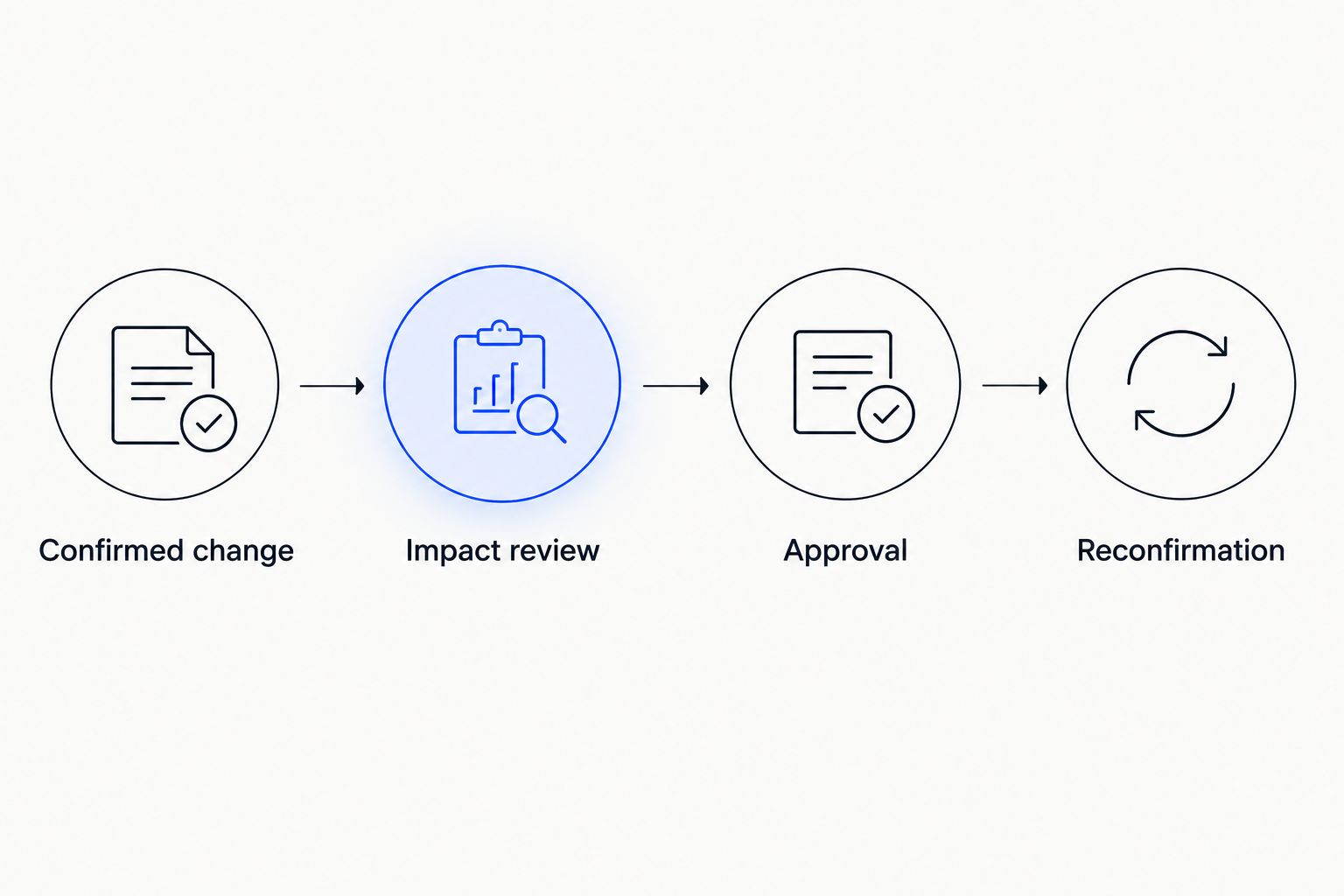
Use a hypothetical disruption to assess the proposed working relationship. Start with an altered arrival time, then trace the implications for the residence, ground movement, family, and next personal commitment. You can map this yourself before discussing it with a provider.
The important question is not simply whether someone notices the change. It is who assesses the consequences, who seeks approval, and who confirms the revised arrangements. A handoff remains unresolved until the receiving party has acknowledged the relevant instruction.
Organize this exercise around Confirmed change, Impact review, Approval, and Reconfirmation. These are assessment stages you can use with any prospective membership, not a description of a particular company's operating procedures.
Keep the test proportionate. You are evaluating whether the responsibilities make sense, not demanding a fictional operational demonstration or treating a discussion as a service guarantee. Ask the provider to identify any part of the example that falls outside its proposed remit.
- Establish which change is confirmed and which details remain uncertain.
- Identify every personal arrangement affected by the change.
- Name the person authorized to approve the revised plan.
- Ask how outstanding confirmations would be communicated.
5. Set information boundaries around personal movements
Begin with an information-sharing map. Identify who needs the full itinerary, who needs only an arrival instruction, and who has no operational reason to receive either. Discretion starts with limiting distribution, not attaching a confidentiality label to an unnecessarily broad message.
Professional visibility does not make personal travel details public instructions. Family movements, residence details, and an athlete's personal schedule should have defined recipients. Ask prospective memberships to explain their information-handling practices rather than assuming what confidentiality arrangements apply.
For your 2026 review, include representatives who might receive updates but do not have authority to approve changes. Receiving information and directing arrangements are different permissions. Make that distinction explicit when family members, assistants, and external providers participate.
Review what happens when the relationship changes, too. A departing assistant or newly appointed representative should trigger a deliberate review of access and authority. Avoid assuming that an old distribution list remains appropriate indefinitely.
- List recipients by the information they need to perform their role.
- Separate authority to instruct from permission to receive updates.
- Ask how sensitive details are shared with external providers.
- Specify who can authorize adding another recipient.
- Review permissions when representatives or family arrangements change.
6. Prepare a qualified membership inquiry
Write a concise brief using the work above. Explain the recurring coordination you need, the people already involved, and the gaps you want a membership to address. A clear account of ongoing needs is more useful than an impressive but disconnected list of desired experiences.
Describe your circumstances without assuming that professional status determines eligibility. Membership fit concerns the proposed relationship; acceptance remains a separate decision. Do not substitute an unconfirmed spending threshold, travel frequency, or public profile for an actual discussion of suitability.
Ask what information is needed for the next stage before sharing sensitive documents. Your initial brief can describe the shape of your travel without disclosing exact private movements. Detailed information should follow a defined purpose and an understood handling process.
End the inquiry with a practical question: can the proposed membership coordinate these connected requirements within a clearly agreed remit? That answer provides a better basis for your decision than general statements about access or personal attention.
- Summarize the recurring coordination you want to delegate.
- Identify existing representatives and their retained responsibilities.
- Describe the boundaries between official and personal travel.
- Ask how suitability and the next application stage are assessed.
Compare private concierge membership approaches
Compare the proposed remit rather than assuming every membership delivers the same service. The approaches below are evaluation categories, not claims about named providers. Ask each provider which description reflects its actual offering and where its responsibilities stop.
| Membership approach | Best for | Main advantage | Key limitation to examine |
|---|---|---|---|
| Travel-focused private membership | Athletes whose recurring needs center on personal journeys | Keeps the assessment focused on travel requirements | Residence and personal-access coordination require separate confirmation |
| Lifestyle-focused private membership | Athletes prioritizing recurring personal experiences and access requests | Organizes the relationship around personal lifestyle needs | Travel continuity and responsibility for connected movements need clarification |
| Cross-domain private membership | Athletes with connected travel, aviation, residence, and access requirements | Addresses several related coordination areas within one proposed relationship | Scope alone does not establish sporting expertise or operating commitments |
Choose the approach that matches your recurring coordination gaps, not the longest list of services. A narrower membership with a clearly understood remit is a better fit than a broader relationship whose responsibilities remain ambiguous.
When comparing named memberships, use the JetVoy vs Quintessentially comparison as a starting point for questions. Confirm current terms and scope directly rather than treating a comparison article as a membership agreement.
Common mistakes professional athletes make
Treating personal coordination as authority over team travel
A private membership does not establish permission to alter official arrangements. Keep team-controlled transport, reporting requirements, and sporting decisions with the authorized parties. Ask the concierge provider to explain how personal arrangements would connect with those boundaries.
Assessing access while ignoring transitions
An experience can be attractive without fitting the rest of your schedule. Evaluate how the arrival, residence access, accompanying family, and onward movement relate to the commitment. A confirmed experience does not settle every arrangement around it.
Giving several representatives overlapping authority
An agent, assistant, and family member can each have a legitimate role without sharing the same decision rights. Define those rights explicitly. Conflicting instructions require a resolution path, not another group conversation with unclear ownership.
Assuming discretion without discussing information handling
Discretion is a requirement to examine, not an adjective to accept. Ask who receives personal details, why those details are necessary, and how changes in representation affect access. Share information according to purpose rather than convenience.
Choosing membership for an isolated request
An ongoing relationship should solve an ongoing coordination need. If your requirement ends with a single journey, assess that honestly before pursuing membership. Professional status alone does not establish a need for continuous concierge support.
FAQ
What are concierge services for professional athletes?
Concierge services for professional athletes coordinate personal travel and related logistics around sporting commitments. The agreed scope should distinguish private requirements from arrangements controlled by a team, federation, or representative.
Is private concierge membership suitable for every professional athlete?
No. Private concierge membership is most relevant when an athlete needs an ongoing coordination relationship rather than help with an isolated request. Suitability and acceptance require a direct discussion with the provider.
Does JetVoy offer an athlete-specific membership?
JetVoy describes its offering as private membership concierge coordination across global travel, private aviation, exceptional residences, and exclusive access. Discuss athlete-specific requirements directly rather than assuming that a dedicated sporting program is included.
Can a private concierge change my team's travel arrangements?
A private concierge needs explicit authority before acting on arrangements controlled by another party. Your team or its authorized representative retains responsibility for decisions within its remit.
How should I compare private concierge memberships in 2026?
Compare memberships by recurring coordination scope, decision authority, information handling, and responsibility for changed plans. Ask each provider to explain exclusions and the boundaries of its proposed relationship.
Can my agent or personal assistant remain involved?
You can make continued involvement by your agent or assistant a requirement when discussing membership. Establish who can instruct, who approves changes, and who receives information before arrangements begin.
What should I prepare before making a membership inquiry?
Prepare a concise brief describing recurring personal travel needs, existing representatives, and unresolved coordination responsibilities. Ask what additional information is necessary before sharing sensitive itinerary or identity details.
One last thing
Before making your 2026 membership decision, ask one question: Who owns the transition between the official commitment and the private plan?
If the answer is unclear, adding more arrangements will not resolve it. Define the handoff first. A useful ongoing relationship begins with an agreed responsibility, a clear authority to act, and an understood boundary—not an assumption that someone else is handling the gap.