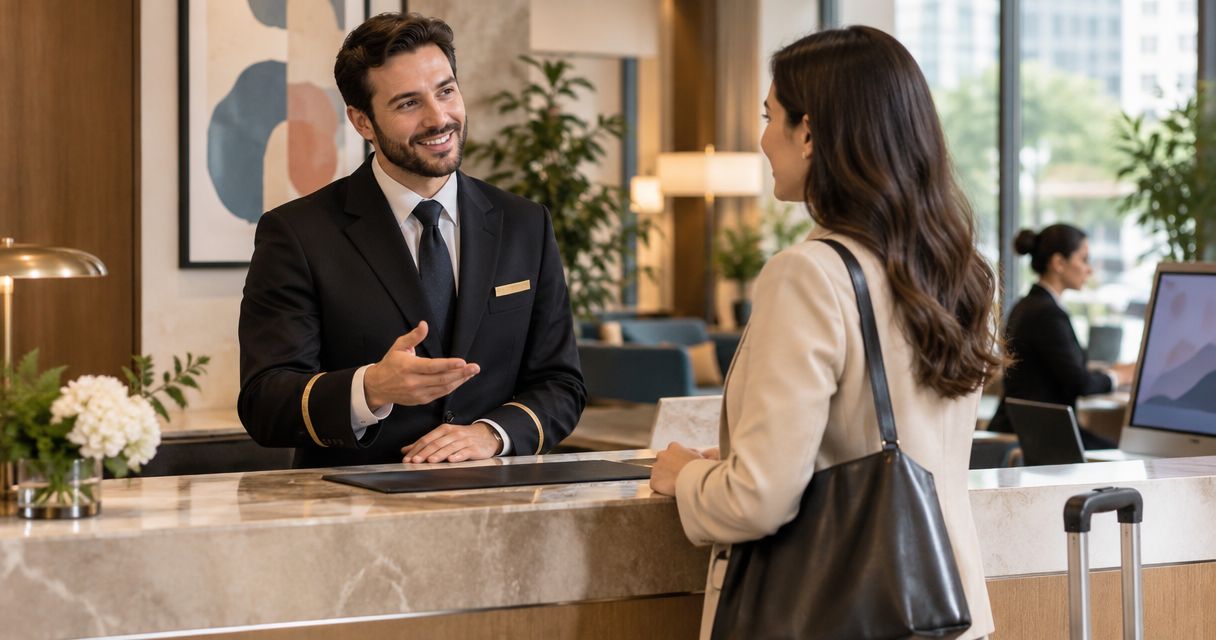

Private art fair travel planning works best when viewings, hosting, residences and private movement follow a shared itinerary rather than separate instructions. For your 2026 plans, establish which commitments are fixed, who can approve changes and how each change affects the rest of the visit; private concierge membership fits an ongoing coordination need, not simply an isolated request.
- Private art fair travel planning should connect viewings, hosting and private movement in a shared itinerary.
- Jetvoy suits individuals seeking an ongoing private concierge membership across travel, aviation, residences and access.
- Treat requested access and confirmed access differently; neither membership nor private aviation guarantees admission.
- Assess membership fit through recurring coordination needs, decision authority and discretion—not a single event.
Why this matters
An art fair visit is not just a sequence of destinations. A viewing determines when you leave a residence; a hosting commitment determines when you must return; a changed departure affects both.
The practical question is whether you want help with individual requests or an ongoing relationship connecting them. Jetvoy is a private membership concierge service coordinating global travel, private aviation, exceptional residences and exclusive access for individuals, family offices and corporate executives. That scope is relevant when your art fair visit belongs within a wider pattern of global movement.
The objective is a coherent visit, not a crowded itinerary. Decide what deserves protection before deciding what else to add.
How should private art fair travel planning align the visit?
Start with the commitments that determine everything else. Then connect the movement, residence and hosting arrangements around them, keeping unresolved requests visibly separate from confirmed commitments.
Use this sequence for your 2026 art fair brief:
- Set your purpose. Identify whether your priority is focused viewing, maintaining relationships, hosting guests or combining these activities. State what you will remove if the schedule becomes too crowded.
- Identify fixed commitments. Record confirmed appointment windows, hosting obligations and departure constraints. Do not give a preferred appointment the same status as an accepted invitation.
- Connect private movement. Consider the journey between commitments, not merely the vehicle or aircraft involved. Include where each movement begins and what must happen before the next appointment.
- Choose the residence around the visit. Assess its relationship to viewing locations, hosting plans and departure points. A residence should support the itinerary you actually intend to follow.
- Assign decision authority. Identify who can change the schedule, accept an invitation or approve a revised movement plan. Establish which decisions require your direct involvement.
- Review the whole visit after a change. A revised viewing time is not fully resolved until the affected movement, guests and later commitments have been reconsidered.
A useful itinerary makes dependencies visible. It also distinguishes what is confirmed, what is requested and what remains a preference.
Compare coordination methods, not itinerary length
These are approaches to assess within private concierge memberships, not claims about a particular provider. Ask how a prospective membership would handle each situation.
| Approach | Best for | Practical strength | Limitation to examine |
|---|---|---|---|
| Request-led coordination | A clearly bounded event requirement | Keeps the immediate task specific | Connections with other commitments still need an owner |
| Continuous coordination | Recurring travel with linked viewing, hosting and movement needs | Treats changes as itinerary-wide decisions | Requires context, clear authority and an ongoing relationship |
Neither approach removes the need for confirmation. Continuous coordination is relevant when the connections between requests matter as much as the requests themselves.
Build the visit around connected commitments
For your 2026 visit, organize the brief around the following areas. Each needs its own details, but none should operate independently.
Viewings
Separate essential appointments from optional opportunities. Record the location, confirmed attendance window, accompanying guests and any instructions supplied by the organizer or gallery.
Keep the purpose of each appointment clear. An appointment requiring your full attention should not compete with an unresolved hosting decision that only you can make.
Hosting
Define whom you intend to host and what the commitment requires from you. Distinguish a social intention from an agreed arrangement, especially when guests are coordinating their own movements.
Hosting adds dependencies beyond your personal schedule. If a viewing changes, ask whether guests, arrival instructions or the hosting location also need attention.
Private movement
Describe movement as a connection between commitments. Include the departure point, intended destination, accompanying travelers and the constraint that matters at arrival.
A private movement plan is incomplete if it stops at the destination. Consider what happens on arrival, who needs the updated information and whether the next commitment still works.
Residences
Assess the residence against the shape of the visit. Consider privacy requirements, the people accompanying you and whether hosting is part of the intended use.
Confirm the applicable terms before building plans around a residence. Do not assume that a suitable place to stay is also suitable for receiving guests.
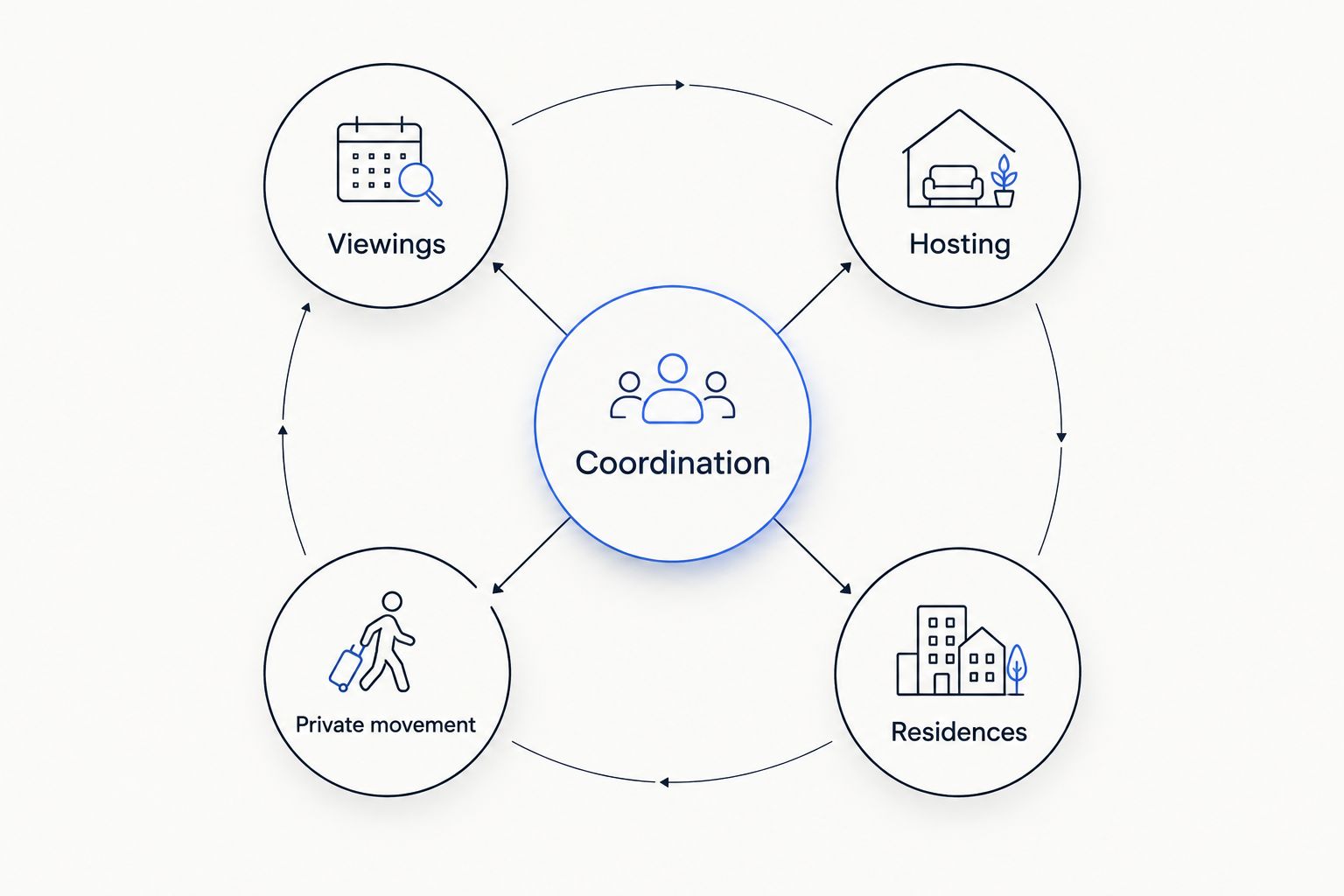
The coordination layer connects Viewings, Hosting, Private movement and Residences. Its purpose is to expose the consequences of a change before you approve it.
Why art fair coordination varies
The right level of coordination depends on how your commitments interact. A longer itinerary is not automatically more demanding than a short visit with tightly connected obligations.
- Purpose of attendance. Focused viewing and hosting create different demands on your attention. State which takes priority when they conflict.
- Status of access. A confirmed invitation, a pending request and a preferred opportunity require different treatment. Keep their status explicit throughout planning.
- People involved. Accompanying guests, assistants and hosts need relevant information without necessarily receiving the full itinerary. Define who needs to know what.
- Movement dependencies. A changed appointment can affect ground movement, aviation and your departure from the residence. Assess the chain, not just the changed segment.
- Decision authority. Coordination stalls when nobody knows which changes require approval. Establish the boundary between delegated decisions and personal decisions.
- Continuity beyond the fair. Your next destination can constrain the final day. Include the onward journey in the brief rather than treating the fair as a self-contained visit.
Use these factors to describe your needs precisely. They provide a stronger basis for evaluating membership than a broad request for access.
What belongs in your 2026 coordination brief?
Give a prospective private concierge membership enough context to assess the relationship. A list of desired experiences is not the same as a usable brief.
Priorities and boundaries
State the purpose of the visit, the commitments you will protect and what you are willing to decline. Include boundaries around hosting and how much of your schedule should remain uncommitted.
For example, describe whether viewing should take precedence over social invitations. That is a decision rule, not a request for the concierge to infer your preferences.
Confirmations and open questions
Provide the current status of each commitment and identify the source of confirmation. Keep unanswered questions beside the relevant item rather than buried in a separate conversation.
Do not circulate an aspirational itinerary as though it were final. Clear status language protects your own decisions and the expectations of accompanying guests.
Communication and discretion
Specify who should receive updates, who can speak on your behalf and what information should remain restricted. Share the details necessary for coordination without distributing unrelated personal context.
Ask how the prospective membership handles itinerary changes and sensitive information. Seek an explanation of its process rather than assuming a particular communication channel or confidentiality arrangement.
Continuity after departure
Include the onward journey and any commitments that remain after the fair. Hosting follow-up and later travel decisions should not become invisible merely because the main event has ended.
Your brief should show where this visit sits within your broader travel pattern. That helps distinguish a recurring membership need from an isolated assignment.
Is ongoing private concierge membership the right fit?
Jetvoy is best suited to globally mobile individuals seeking ongoing private concierge coordination across travel, aviation, residences and access. Assess that fit against your wider requirements, not only the appeal of a particular art fair.
Membership is relevant when you want continuity across recurring commitments. It is less aligned with a requirement limited to an isolated viewing or movement, particularly if you do not want an ongoing relationship.
There is a trade-off. Continuous coordination requires you to communicate priorities, disclose relevant constraints and establish decision authority. It does not remove your responsibility for decisions that only you can make.
For a 2026 membership assessment, describe the pattern: how art fair visits connect with other travel, whom you regularly travel with and where disconnected instructions create difficulty. An application should communicate that pattern without assuming acceptance or a spending threshold.
Does private aviation solve art fair scheduling conflicts?
Private aviation does not resolve conflicts between viewing appointments, hosting obligations and access conditions. Treat aviation as part of the coordination brief, not as a substitute for deciding which commitments take priority.
Ask what a proposed movement change means for the entire visit. A departure preference has little value if the arrival no longer supports the appointment you intend to protect.
Can private concierge membership guarantee fair access?
Private concierge membership does not establish admission or viewing entitlement. Treat access as confirmed only when the relevant organizer, gallery or host has confirmed it under the applicable conditions.
Separate coordination capability from permission. Before committing the surrounding itinerary, understand which invitations or appointments remain unresolved.
Should you plan hosting before confirming viewings?
Plan hosting alongside viewings, but do not let an unconfirmed viewing silently determine a firm hosting commitment. Protect confirmed obligations and make the remaining uncertainty visible.
If you choose to commit to hosting first, record the consequence: later viewing opportunities must fit around that obligation unless you explicitly decide otherwise.
FAQ
What's the best starting point for private art fair travel planning?
Start with your purpose and confirmed commitments, then connect residences, hosting and private movement around them. Keep requested access separate from confirmed appointments so unresolved plans do not dictate the entire visit.
Is ongoing concierge membership better than help with an isolated art fair request?
Ongoing concierge membership fits recurring, connected needs; an isolated request does not by itself establish membership fit. Assess whether you want continuity across your wider travel rather than support limited to the fair.
Can I assume a private viewing is included with concierge membership?
Do not assume a private viewing is included or confirmed through membership. Confirm the particular arrangement and its conditions with the relevant organizer, gallery or host before relying on it.
How should I coordinate guests arriving separately?
Give each guest the information needed for their own arrival and identify who can approve changes affecting the group. Keep shared commitments aligned without distributing your full personal itinerary unnecessarily.
What should I ask before using a residence for hosting?
Confirm that the intended hosting arrangement is permitted under the residence's applicable terms. Describe the intended use before making the residence central to your hosting plans.
What happens when a viewing time changes?
Review the changed viewing against movement, hosting, residence arrangements and the onward journey. A revised appointment time is not a complete resolution until its connected commitments have been checked.
Who is Jetvoy private concierge membership for?
Jetvoy private concierge membership is for high-net-worth individuals, family offices and corporate executives seeking coordination across global travel, private aviation, residences and access. Membership fit centers on an ongoing relationship, not an assumption of acceptance or guaranteed access.
One last thing
Before approving your final 2026 itinerary, remove the most important viewing from it on paper. Then ask which other commitments would need to change and who would authorize those changes.
This is a dependency check, not a prediction. If the answers are unclear, clarify ownership before adding another invitation. The strongest brief explains what to protect when plans change.